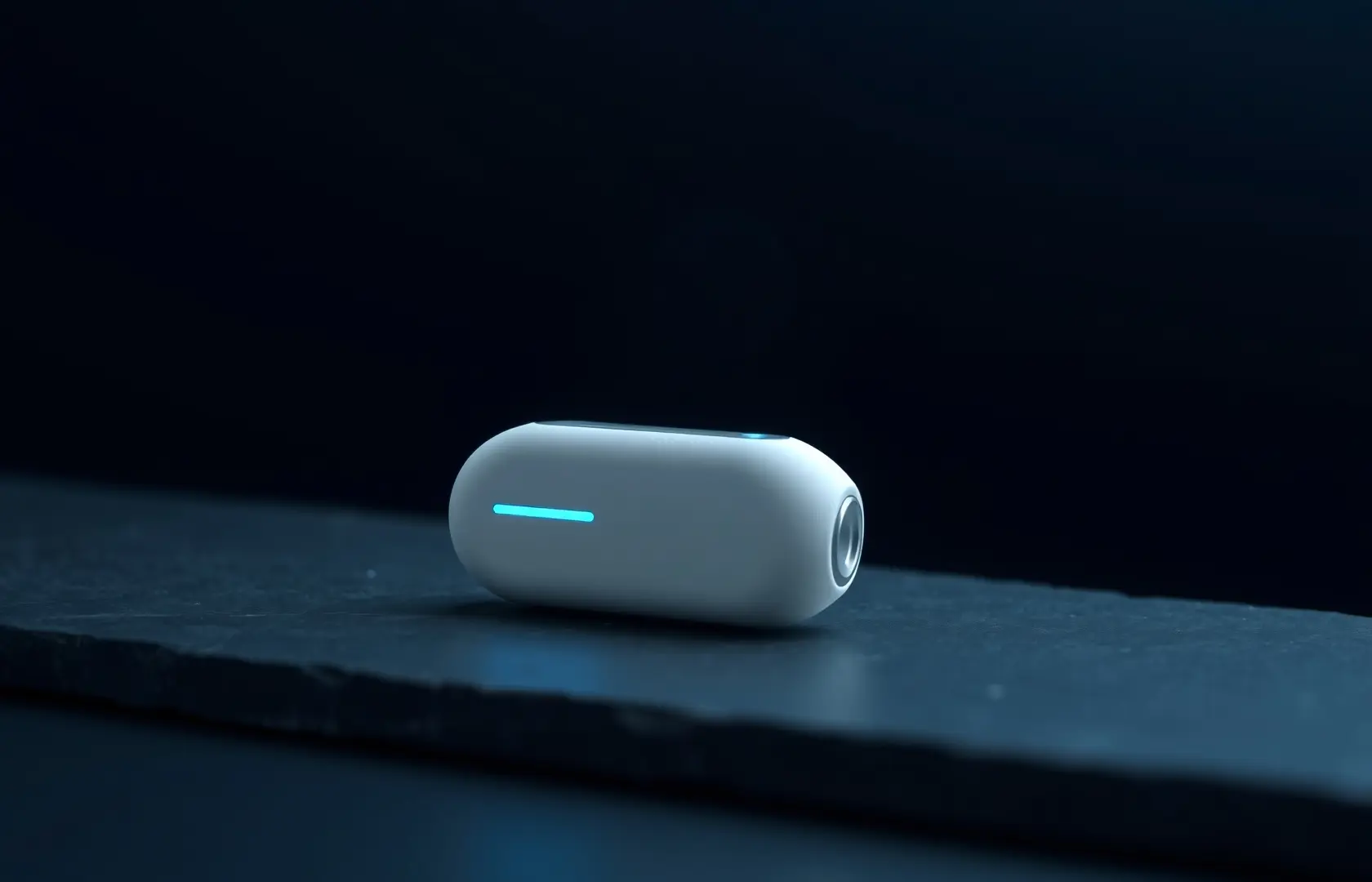
The boundary between artificial intelligence and the physical world is beginning to blur. For years, the industry’s most powerful models have been confined to browser tabs and smartphone apps. However, OpenAI is now making a definitive move to change that reality. By reorganizing internal teams and recruiting heavy-hitting hardware veterans, the company is signaling a shift toward a future where AI is not just something you type at, but something you talk to—and perhaps even wear.
This transition marks a critical evolution for the organization. As the novelty of chatbots begins to plateau, the race is on to create “ambient computing” environments. In these scenarios, AI is always available, low-friction, and integrated into our daily routines without the need to constantly look at a screen. The core of this strategy appears to be a voice-first hardware ecosystem powered by the latest advancements in multimodal reasoning.
The Internal Shift: From Software to Physical Products
Recent reports indicate that OpenAI has begun a significant internal reorganization, specifically aimed at consolidating talent for hardware development. This isn’t just a side project; it is a structural pivot. The company is moving engineers and product specialists from its core research and “Advanced Voice Mode” teams into a dedicated hardware unit. The goal is clear: to build devices that can natively run or seamlessly interface with their most advanced models, like GPT-4o.
By bringing hardware and software development under the same roof, OpenAI hopes to solve the primary bottleneck of existing AI gadgets: latency. For an audio-based AI to feel natural, the response time must mimic human conversation. Currently, the delay caused by sending audio to a server, processing it, and sending it back can break the “immersion.” By designing the hardware alongside the model, OpenAI can optimize the entire pipeline, from the microphone array to the processing chips.
Recruiting a Hardware Titan: Caitlin Kalinowski
Perhaps the strongest signal of OpenAI’s hardware ambitions is the hiring of Caitlin Kalinowski. Formerly the head of Meta’s augmented reality (AR) hardware team, Kalinowski led the development of the “Orion” glasses, which are widely considered the most advanced AR prototype in existence. Her move to OpenAI suggests that the company is looking far beyond simple smart speakers.
Kalinowski brings over a decade of experience in consumer electronics, having previously worked on the design of the MacBook Air at Apple and the Oculus Rift at Meta. Her expertise in miniaturization, thermal management, and user ergonomics is exactly what OpenAI needs to turn a massive large language model into a sleek, wearable device. Her appointment confirms that OpenAI is no longer content being a software supplier; they want to control the “entry point” of AI.
The Jony Ive and LoveFrom Collaboration
While Kalinowski leads the engineering, the aesthetic and philosophical design of OpenAI’s hardware likely rests with one of the most famous designers in history: Sir Jony Ive. It has been confirmed that OpenAI CEO Sam Altman is collaborating with Ive and his design firm, LoveFrom, to create what many are calling the “iPhone of AI.”
Ive, the mastermind behind the iMac, iPod, and iPhone, is known for his minimalist approach and obsession with how humans interact with objects. Rumors suggest that this new AI device will move away from the “attention-grabbing” nature of the smartphone. Instead of a screen filled with notifications, the device will likely focus on audio interaction and vision-based context. The philosophy is to create a device that is “calm”—one that assists the user without demanding their constant visual attention.
This collaboration is particularly significant given the recent scaling of OpenAI’s financial reach. To understand how these massive partnerships are funded, you can read about SoftBank’s $41B OpenAI deal, which provides the capital necessary for such high-stakes hardware ventures.
Why Audio is the Core of the Experience
You might wonder why OpenAI is prioritizing audio over vision or screens. The answer lies in the technical breakthrough of GPT-4o. Unlike previous models that required a separate “speech-to-text” and “text-to-speech” step, GPT-4o is natively multimodal. This means it understands audio directly, capturing nuances like tone, emotion, and multiple speakers simultaneously.
- Human-Like Latency: GPT-4o can respond to audio inputs in as little as 232 milliseconds, which is comparable to human response times in a conversation.
- Emotional Intelligence: Because the model “hears” the audio rather than just reading a transcript, it can detect if a user is frustrated, excited, or joking.
- Hands-Free Utility: Audio is the most natural interface for “on-the-go” scenarios, such as cooking, driving, or walking.
By focusing on an audio-first device, OpenAI is betting that the future of AI isn’t about looking at a better screen; it’s about having an intelligent companion that “lives” in your ear or on your collar, ready to assist through voice.
The Competitive Landscape: Meta, Apple, and Beyond
OpenAI is entering a crowded arena. Meta has already found surprising success with its Ray-Ban Meta Smart Glasses, which use a camera and microphones to provide a “multimodal” AI experience. Meanwhile, Apple is rumored to be overhauling Siri with its own generative models and exploring similar wearable categories. For more on how the competition is heating up, see how Meta is acquiring AI agent startups to bolster their own hardware ecosystem.
However, OpenAI has a unique advantage: the model itself. While Siri and Meta AI are improving, GPT-4 remains the industry benchmark for reasoning and creativity. If OpenAI can build a device that feels as premium as an Apple product but possesses the raw intelligence of their flagship models, they could disrupt the entire consumer electronics market.
Challenges to Overcome
Transitioning from a software company to a hardware manufacturer is notoriously difficult. OpenAI will face several hurdles that cannot be solved with better algorithms alone:
- Battery Life: Running high-performance AI models requires significant power. Finding a balance between a lightweight form factor and a battery that lasts all day is a major engineering challenge.
- Privacy Concerns: A device that is “always listening” or “always seeing” creates massive privacy anxieties. OpenAI will need to be transparent about how data is processed and stored.
- Supply Chain: Building physical products requires managing global manufacturing and logistics—a far cry from deploying code to a cloud server.
Conclusion: The Dawn of Ambient Computing
The reorganization of OpenAI’s hardware teams is more than just a corporate shuffle; it is a declaration of intent. By pairing the engineering prowess of Caitlin Kalinowski with the design vision of Jony Ive, OpenAI is attempting to define the next era of computing. We are moving toward a world where the most powerful tool in human history no longer requires a screen to be useful. Whether it’s a pair of glasses, a pendant, or a new category of wearable, the future of AI is taking a physical shape—and it starts with the human voice.