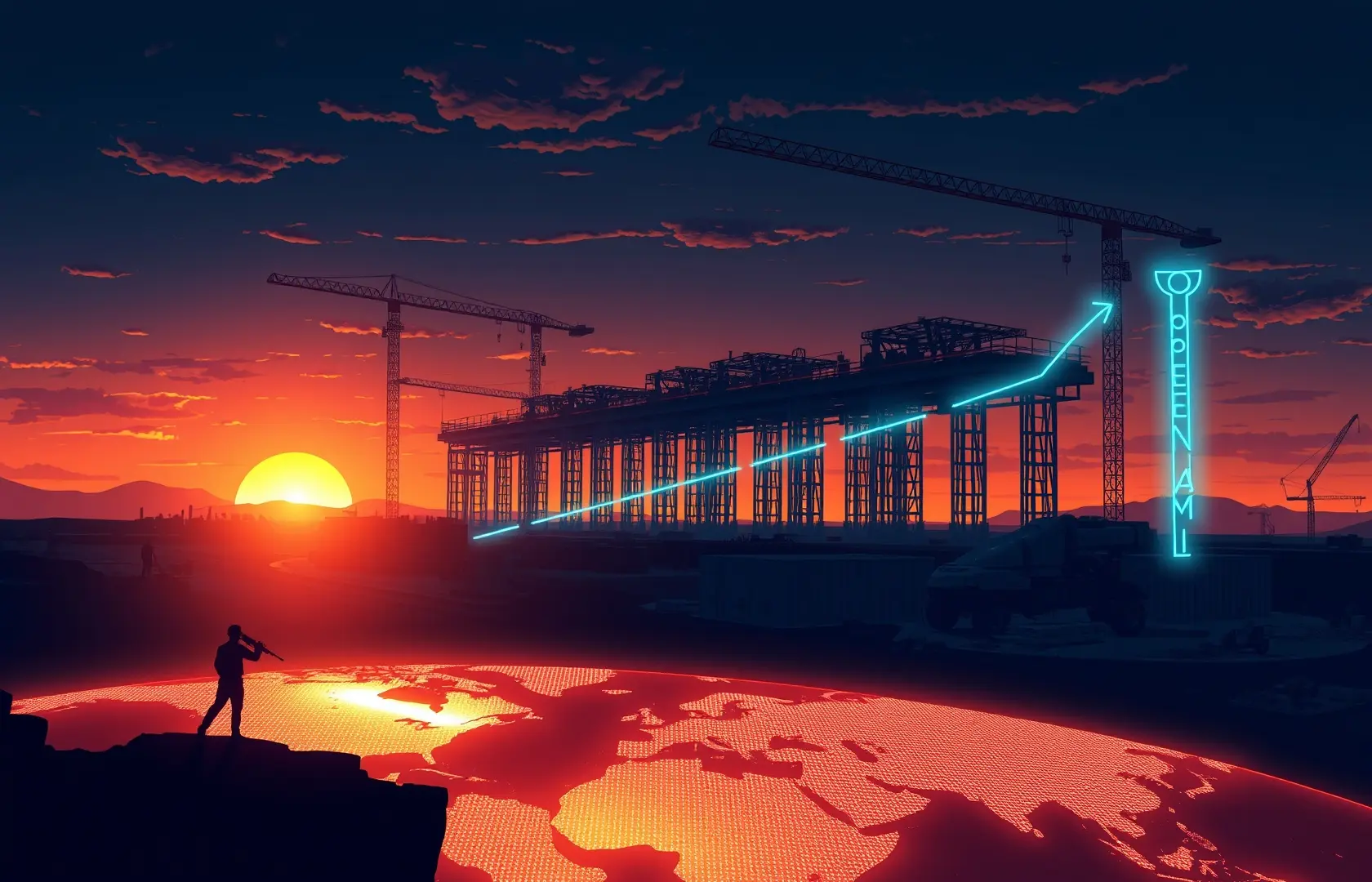
The race for artificial intelligence dominance has entered a new stratosphere of capital requirements. OpenAI CEO Sam Altman is reportedly engaging with prominent investors in the Middle East to secure a staggering $50 billion funding round. This move underscores a fundamental shift in the AI industry: the transition from building sophisticated software to constructing the massive physical infrastructure necessary to run it. As the valuation of the ChatGPT creator climbs toward the $800 billion mark, the focus is no longer just on algorithms, but on the silicon, steel, and power grids that make intelligence possible.
The $50 Billion Vision: Scaling Beyond Software
For years, the tech world viewed AI primarily as a software challenge. However, as models like GPT-4 and the anticipated GPT-5 grow in complexity, the hardware bottleneck has become the primary obstacle to progress. Sam Altman’s quest for $50 billion is not merely about operational costs; it is a strategic maneuver to secure the global supply chain for AI. This includes everything from specialized semiconductors to the massive data centers required for training and inference.
The scale of this funding round would dwarf almost any previous private investment in the tech sector. By engaging with sovereign wealth funds in the United Arab Emirates and other Middle Eastern nations, OpenAI is tapping into some of the world’s deepest pools of capital. These investors, such as Abu Dhabi’s tech-focused firm MGX, are increasingly positioning themselves as the backbone of the global AI economy, recognizing that “infrastructure is destiny” in the 21st century.
Project Stargate and the Infrastructure Revolution
Central to Altman’s pitch is a massive infrastructure initiative often referred to as Project Stargate. This project aims to build a network of hyper-scale data centers across the globe, including significant sites in the United States, Norway, and South Korea. These facilities are designed to house hundreds of thousands of AI chips, providing the raw compute power necessary to achieve Artificial General Intelligence (AGI).
The infrastructure requirements are mind-boggling. Project Stargate is part of a broader vision that could eventually see $500 billion to $2 trillion invested in global AI capacity. Already, we have seen significant movements in this area, such as when OpenAI and SoftBank invested $1B in Stargate Energy to address the rising power demands of these facilities. A 10-gigawatt commitment by the end of 2025 is a key milestone in this roadmap, ensuring that the lights stay on as AI models grow larger and more demanding.
The Energy Conundrum
One of the biggest hurdles for OpenAI isn’t just funding, but the physical availability of electricity. AI data centers consume vast amounts of power, often straining local grids. Altman’s strategy involves not just building the centers, but also investing in the energy sources that power them, including nuclear and renewable energy. This holistic approach is why partnerships with companies like Microsoft and Samsung are becoming increasingly vital. They provide the cloud expertise and semiconductor manufacturing capacity that OpenAI needs to realize its ambitions.
Geopolitical Implications of Mideast Investment
Seeking $50 billion from the Middle East carries significant geopolitical weight. As the U.S. government looks to maintain its lead in AI over rivals like China, the source of funding for its champion companies is under intense scrutiny. However, Altman has been proactive in aligning his global infrastructure initiative with U.S. interests, even meeting with federal officials to discuss a private-sector investment plan that could reach $500 billion to outpace international competition.
Middle Eastern investors are not just providing cash; they are seeking to transform their own economies. By participating in this $50 billion round, nations like the UAE are ensuring they have a seat at the table as AI reshapes global industries from healthcare to finance. This partnership reflects a new era of “AI diplomacy,” where technology leads the way in international relations.
Why This Matters for the Future of AGI
The ultimate goal of this capital raise is the pursuit of AGI—AI that can outperform humans at most economically valuable tasks. To reach this milestone, OpenAI needs more than just better code; it needs a physical footprint that can sustain the iterative training processes required for advanced reasoning. The recent SoftBank’s $41B OpenAI deal was a precursor to this current round, showing a consistent trend of massive capital influxes aimed at scaling AGI.
- Compute Density: Building centers that can handle the next generation of NVIDIA Blackwell and Rubin architectures.
- Global Reach: Distributing data centers to reduce latency and comply with local data sovereignty laws.
- Talent Acquisition: Using the massive valuation to attract the world’s top AI researchers and engineers.
- Model Refinement: Funding the development of GPT-5 and specialized models like Codex for autonomous coding.
The Path Forward: Q1 2026 and Beyond
Analysts expect the $50 billion round to close sometime in early 2026. If successful, it will set a new benchmark for the private markets and solidify OpenAI’s position as the clear frontrunner in the AI race. The company is already expanding its reach into everyday life, with plans for AI-powered hardware—potentially earbuds or wearables—expected to launch in 2026. This vertical integration, from massive data centers to consumer devices, creates a closed-loop ecosystem that few competitors can match.
As Sam Altman continues his global tour, the message is clear: the AI revolution will be built on a foundation of unprecedented scale. Whether it is partnering with Apple to integrate intelligence into the iPhone or building the world’s largest data centers in Texas, OpenAI is moving fast to ensure that the infrastructure of the future is built today. For investors, the $50 billion question is no longer if AI will change the world, but how quickly they can help build the world it creates.