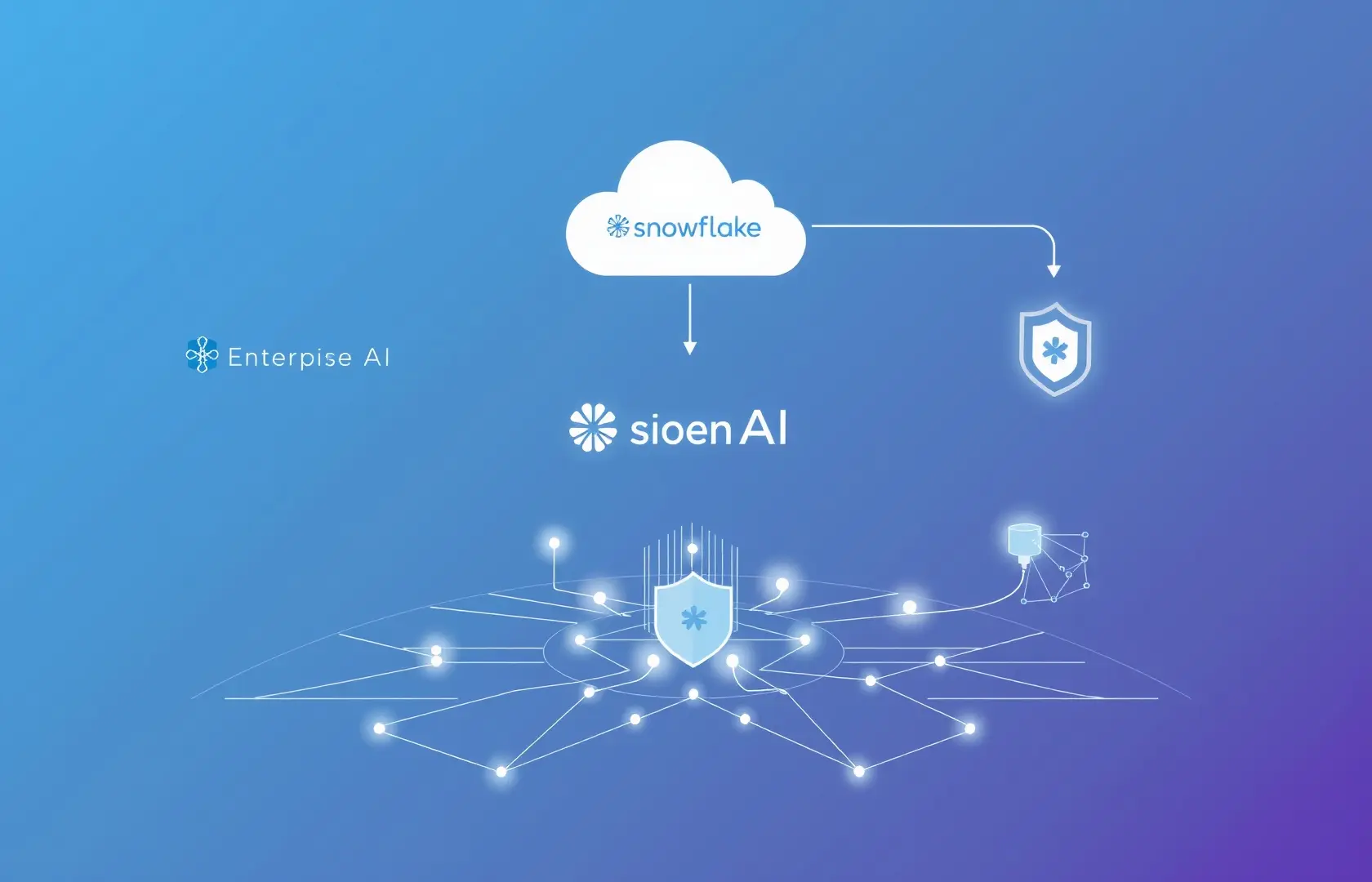
The Strategic Convergence of Data and Intelligence
The enterprise AI race has entered a decisive new phase with the landmark integration between Snowflake and OpenAI. While the initial wave of generative AI was defined by individual consumers experimenting with chatbots, the current era is defined by massive organizations seeking to operationalize large language models (LLMs) within their own secure perimeters. Snowflake, once known primarily as a cloud data warehousing giant, has fundamentally pivoted its identity to become an “AI Data Cloud,” and its deepening relationship with OpenAI is the cornerstone of this transformation.
The partnership signifies a shift in power. For years, the industry narrative focused on which model was the smartest. Today, the focus has shifted to whose platform provides the most seamless access to data. By bringing OpenAI’s frontier models, including GPT-4o, directly into Snowflake Cortex AI, Snowflake is removing the greatest friction point in corporate AI adoption: the risk and complexity of moving sensitive data across different environments.
Snowflake Cortex: Bringing Models to the Data
The core of Snowflake’s AI strategy is Cortex AI, a fully managed service that allows users to access industry-leading LLMs directly within the Snowflake platform. The integration of OpenAI models into this ecosystem is a game-changer for several reasons:
- Zero Data Movement: Traditionally, using a model like GPT-4 required sending data to an external API. With this partnership, the inference happens within the Snowflake security boundary, ensuring that proprietary corporate data never leaves the “walled garden.”
- Unified Governance: By using Snowflake Horizon, organizations can apply the same security, privacy, and compliance policies to their AI workloads as they do to their structured data.
- Ease of Use: Developers can invoke OpenAI models using standard SQL or Python, democratizing access to high-end AI for data analysts who may not be machine learning experts.
This approach addresses the primary concern of the modern CIO: how to leverage the creative power of generative AI without compromising intellectual property. You can learn more about how organizations are managing these risks in our guide on securing AI agents against cyber threats.
Data Gravity and the Battle for Distribution
In the world of technology, “data gravity” refers to the idea that data is heavy and difficult to move; therefore, applications and services naturally gravitate toward where the data lives. Snowflake currently houses the most critical business data for thousands of the world’s largest enterprises. By integrating OpenAI, they are ensuring that “intelligence gravity” follows suit.
This is a strategic masterstroke in the “distribution game.” While OpenAI provides the intelligence, Snowflake provides the reach. For OpenAI, this deal opens a massive front door to 12,000+ enterprise customers who might have been hesitant to use a public-facing API. For Snowflake, it provides a “best-in-class” reason for customers to keep their data on their platform rather than migrating it to a hyperscaler like AWS or Google Cloud.
The Rise of the Agentic Enterprise
The partnership isn’t just about simple text generation; it’s about the shift toward agentic AI. In this model, AI doesn’t just answer questions—it takes actions. Within the Snowflake environment, an AI agent could potentially analyze sales data, identify a slump in a specific region, and then automatically generate a report or suggest a restocking order. The roadmap for these “intelligent agents” is becoming clearer as OpenAI continues to refine its own agentic capabilities, such as those discussed in our coverage of GPT-5.2 and the future of agentic coding.
The Competitive Landscape: Snowflake vs. Databricks
No discussion of the enterprise AI race is complete without mentioning the fierce rivalry between Snowflake and Databricks. While Snowflake began as a data warehouse and moved toward AI, Databricks began with big data processing (Spark) and the “Data Lakehouse” concept.
Databricks has taken a different route to AI dominance, famously acquiring MosaicML and releasing its own high-performing open-source model, DBRX. Snowflake, in contrast, is playing a “multi-model” strategy. While they have released their own open model, Snowflake Arctic, they are simultaneously leaning into heavy-hitting partnerships with OpenAI and Mistral AI. This gives Snowflake customers the flexibility to choose the right model for the right task—using Arctic for cost-efficient data processing and OpenAI for complex reasoning and creative tasks.
This battle is forcing both companies to innovate at a breakneck pace. The winner will likely be the one that provides the most reliable “one-stop-shop” for the entire AI lifecycle, from data ingestion and cleaning to model fine-tuning and deployment.
Security, Privacy, and the Sovereign AI Cloud
One of the most profound implications of the Snowflake-OpenAI deal is the concept of “Sovereign AI.” Enterprises are increasingly wary of “black box” AI where they don’t know how their data is being used to train future iterations of models. Snowflake has doubled down on its commitment to data sovereignty, ensuring that no customer data processed through Cortex AI is used to train foundation models by OpenAI or any other provider.
This commitment is enforced through Snowflake Horizon, a built-in governance layer that provides:
- Data Lineage: Knowing exactly which data was used to generate a specific AI output.
- Differential Privacy: Protecting individual data points while still allowing for aggregate analysis.
- Model Monitoring: Detecting “drift” or hallucinations in real-time to ensure the AI remains accurate and safe.
The Future of Enterprise Intelligence
What does this mean for the future? We are moving toward a reality where “AI” is no longer a separate department or a niche project. Instead, it is becoming a standard feature of the corporate data stack. The Snowflake and OpenAI partnership accelerates this by making the most powerful models in the world available at the push of a button for anyone with a SQL terminal.
As we look toward 2025 and beyond, the “Data Cloud” will likely evolve into a “Cognitive Cloud.” Businesses will no longer ask, “What happened last quarter?” (the realm of traditional BI). Instead, they will ask their data, “What should I do next?” and the AI, powered by the union of Snowflake’s scale and OpenAI’s intelligence, will provide the answer.
The race is far from over, but the alliance between the king of data and the king of LLMs has set a very high bar for the rest of the industry. For enterprises, the message is clear: the path to AI value runs directly through your data, and the infrastructure to unlock that value is finally ready for prime time.