The Evolution from Chatbots to AI Workforces
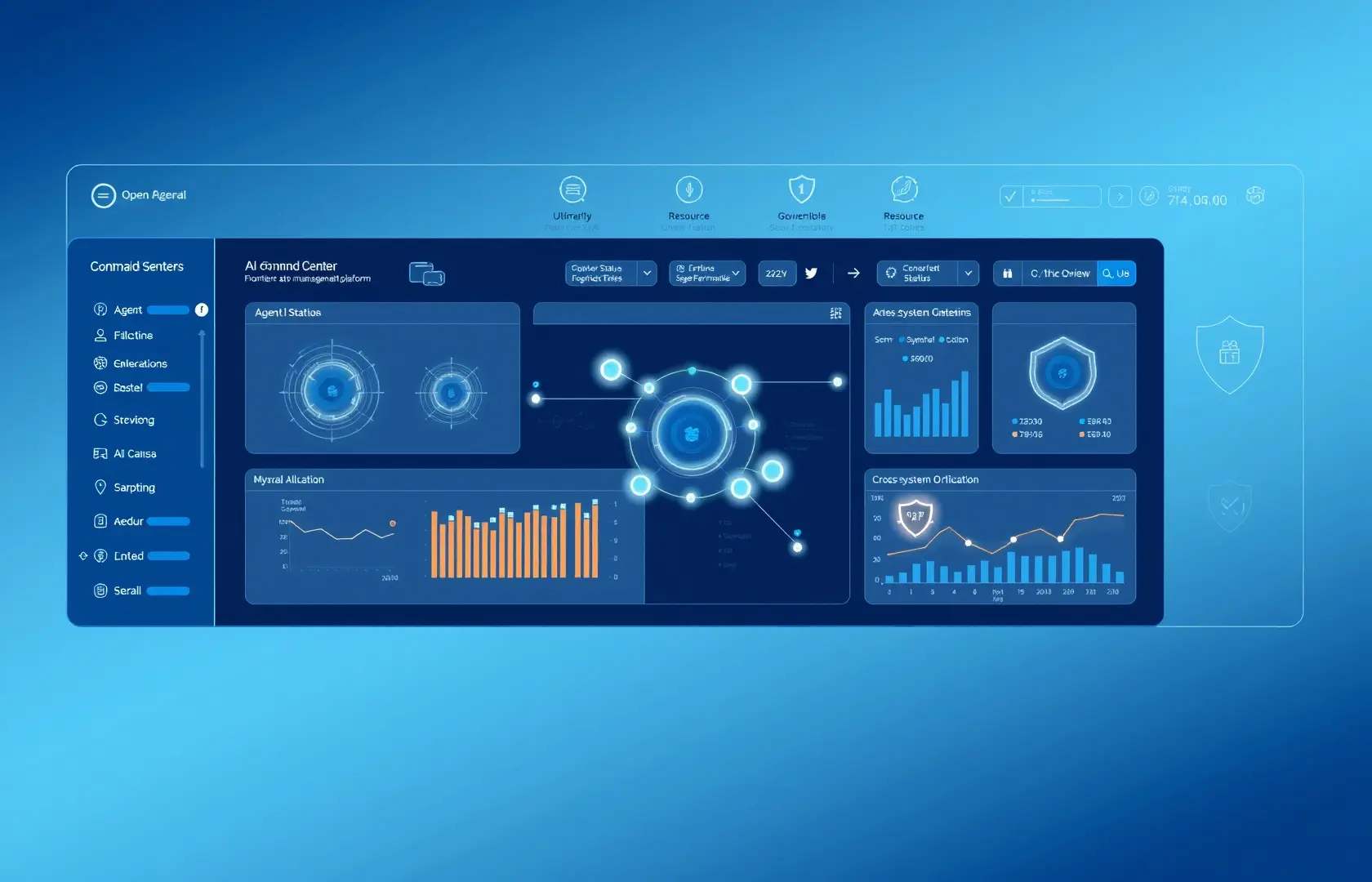
The landscape of artificial intelligence is shifting rapidly from simple, conversational interfaces to complex, autonomous “workers” capable of executing multi-step tasks. In this maturing ecosystem, OpenAI Frontier has emerged as a pivotal enterprise platform designed to serve as the definitive command center for managing these digital entities. As businesses move beyond experimental pilots toward the full-scale deployment of AI agents, the need for a centralized orchestration layer has become undeniable.
Introduced in early 2026, OpenAI Frontier is not just another interface; it is a comprehensive governance and deployment suite. It addresses the growing fragmentation within organizations where different departments might utilize varying models for diverse tasks. By providing a single pane of glass, Frontier allows administrators to build, monitor, and scale AI agents that function as true “AI coworkers” within the existing business infrastructure.
Core Capabilities of OpenAI Frontier
The primary value proposition of Frontier lies in its ability to bring order to what could otherwise be a chaotic “agentic” environment. Large enterprises often struggle with data silos and inconsistent security protocols when implementing AI. Frontier solves this by offering several key features:
- Shared Context and Onboarding: Agents managed through Frontier can share specialized knowledge bases, ensuring that a financial agent and a legal agent are operating from the same “source of truth” regarding company policy.
- Permission and Governance: Administrators can set granular controls over what an agent can and cannot do. For instance, an agent might have the authority to draft an invoice but require human approval to send it.
- Cross-System Orchestration: Frontier allows agents to interact with established enterprise software such as Salesforce, Workday, and Microsoft OneDrive, enabling them to move data across platforms autonomously.
- Agentic Vision: Leveraging the latest advancements in GPT-5.3-Codex, Frontier-managed agents can “see” and interact with GUI elements, making them capable of performing tasks on legacy software that lacks a modern API.
This level of integration is essential for modern enterprise AI, where the goal is to reduce the manual “to-and-fro” between different software suites.
Why Centralized Management Matters in 2026
As organizations scale their AI initiatives, the “vibe working” era—where AI agents handle the bulk of operational logistics—requires robust oversight. Without a platform like Frontier, companies risk “agent sprawl,” where hundreds of autonomous scripts run without clear visibility into their resource consumption or security compliance.
Industry leaders like PwC and Deloitte have noted that the biggest barrier to AI adoption is no longer the capability of the models themselves, but the trust and reliability of the workflows they inhabit. Frontier addresses this by embedding safety protocols directly into the management layer. This ensures that agents are protected against cyber threats like prompt injection or accidental data leaks.
Improving Operational Efficiency
By centralizing agent management, Frontier significantly reduces the “onboarding time” for new AI tools. Instead of building security and connectivity from scratch for every new use case, developers can use Frontier’s pre-built connectors and governance templates. This accelerates the transition from a technical proof-of-concept to a production-ready tool that delivers measurable ROI.
The Competitive Landscape: Frontier vs. the Field
OpenAI is not the only player vying for control of the enterprise AI workforce. The launch of Frontier comes shortly after Anthropic’s Cowork platform and Google’s major expansions into agentic search and Gmail automation. However, OpenAI’s strategy focuses on the “universal” nature of its agents, positioning Frontier as a model-agnostic control plane that prioritizes developer flexibility and long-horizon reasoning.
While Microsoft continues to push its Copilot ecosystem deep into the Windows and Office environments, OpenAI is positioning OpenAI Frontier as the preferred choice for companies seeking a dedicated, customizable platform that isn’t tied exclusively to a single operating system. This flexibility is crucial for global enterprises that rely on a diverse stack of cloud and on-premise solutions.
Strategic Integration with GPT-5.3-Codex
A significant factor in Frontier’s performance is its native integration with the GPT-5.3-Codex model. Unlike general-purpose chatbots, these specialized models are optimized for technical reasoning and software interaction. When an agent is deployed via Frontier, it benefits from a 25% increase in execution speed compared to previous iterations, allowing for real-time problem-solving in fast-paced environments like financial trading or software DevOps.
This speed, combined with the “agentic vision” capabilities, allows Frontier to handle complex tasks that were previously too high-risk for AI. For example, a Frontier agent can monitor a complex supply chain across multiple continents, identifying potential delays in shipping and proactively notifying suppliers and logistics teams—all while staying within the strict governance parameters set by the company’s human managers.
Governance: The New Frontier of AI Safety
As we look toward the future, the role of the “Agent Boss” is becoming a standard position within corporate hierarchies. These are human employees tasked with overseeing fleets of AI agents. Frontier provides these professionals with the telemetry and auditing tools needed to ensure that the AI workforce remains aligned with corporate values and regulatory requirements.
Security remains a top priority. Frontier includes automated tools to detect hidden backdoors in open-source models and utilizes advanced sandboxing to ensure that even if an agent encounters a malicious link, the threat remains contained. This proactive approach to security is what differentiates a consumer-grade chatbot from a true enterprise-grade management platform.
Conclusion: The Future of the Autonomous Enterprise
The introduction of OpenAI Frontier marks a turning point in the history of business technology. We are moving away from a world where humans use AI as a tool, and toward a world where humans manage AI as a workforce. By providing the necessary infrastructure for governance, orchestration, and security, OpenAI is enabling the next generation of autonomous enterprise operations.
For organizations ready to scale, the choice is no longer about which AI to use, but how to manage the AI they already have. With Frontier, OpenAI has provided the map and the compass for navigating this complex new landscape, ensuring that the “AI revolution” remains productive, secure, and under human control.