A Strategic Move Toward Autonomous Enterprise Systems
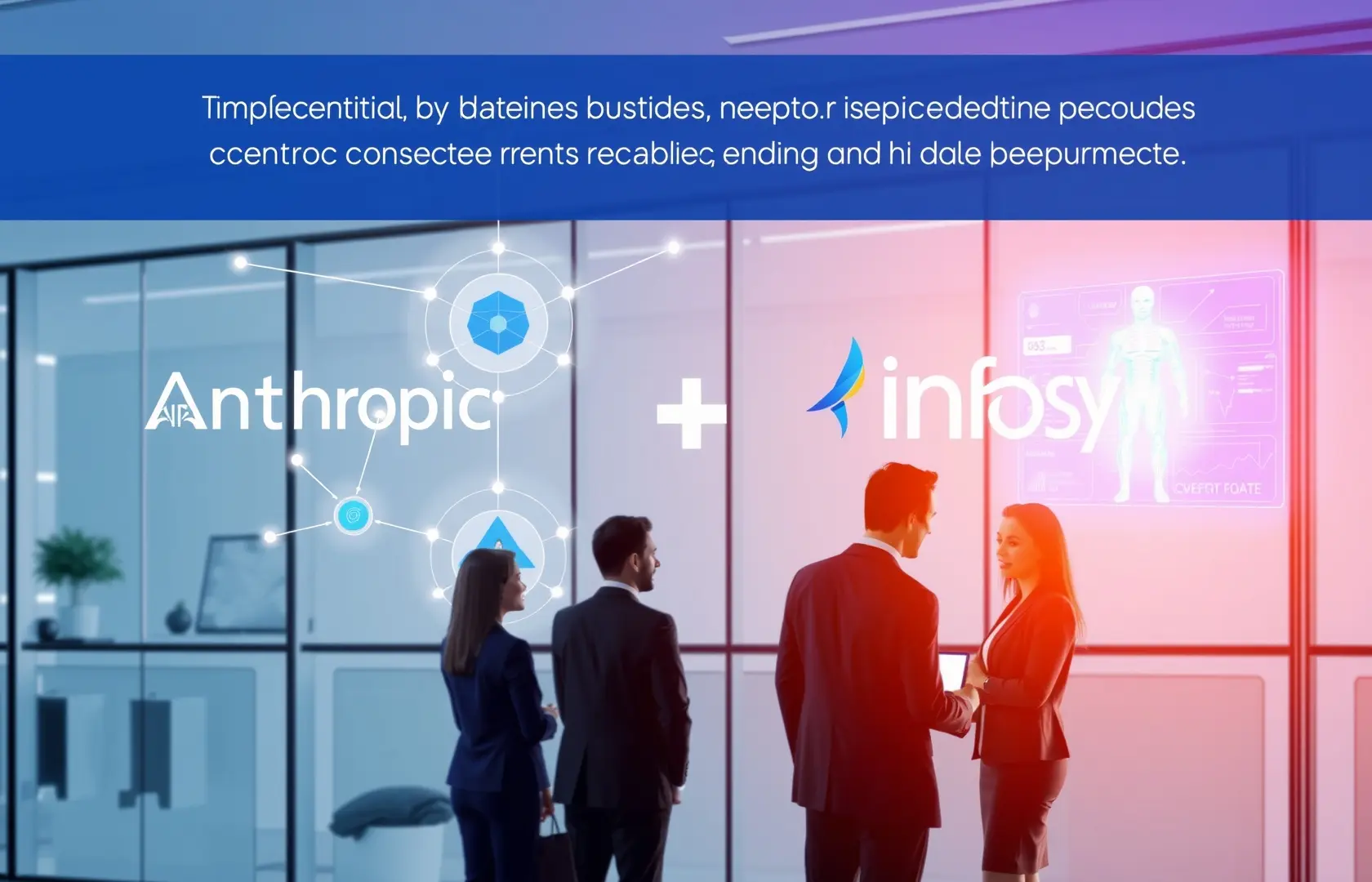
The landscape of corporate automation is undergoing a fundamental shift as the focus moves from simple conversational tools to sophisticated AI agents capable of executing complex tasks. In a significant move for the industry, Infosys and the artificial intelligence research firm Anthropic have announced a strategic collaboration designed to bring custom agentic solutions to global enterprises. By integrating the Claude 3.5 model family with the Infosys Topaz platform, the partnership aims to redefine how industries like telecommunications and financial services operate.
Unlike traditional chatbots that merely respond to queries, these new AI agents are designed to navigate multi-step workflows, access internal databases, and make real-time decisions. This development aligns with a broader trend where businesses are moving beyond experimentation with large language models (LLMs) toward the deployment of practical, action-oriented systems that drive measurable return on investment.
The Power of Agentic Workflows
The term “agentic AI” refers to systems that can plan, reason, and act with a degree of autonomy. While early AI implementations were often limited to “read-only” interactions—summarizing documents or answering FAQs—the new collaboration focuses on “write-access” capabilities. These agents can trigger API calls, update customer records, and coordinate between different software applications without constant human intervention.
Industry experts suggest this is the logical evolution of the technology. According to recent market insights from Deloitte, approximately 50% of enterprises currently utilizing generative AI are expected to deploy autonomous agents by 2027. The Anthropic-Infosys partnership is positioned at the forefront of this wave, providing the infrastructure and consulting expertise needed to transition from static models to dynamic digital workers.
The Synergy of Infosys Topaz and Claude Code
The technical foundation of this partnership rests on the combination of Infosys Topaz—the company’s AI-first suite of services—and Anthropic’s high-performance models. A key component of this integration is the use of Claude Code, a specialized tool designed to assist developers in writing, debugging, and maintaining software at an unprecedented scale.
By leveraging these tools, enterprises can automate the more tedious aspects of software development and maintenance. This trend is already visible within the AI labs themselves; for instance, internal reports suggest that AI is now responsible for a massive percentage of code production at leading firms. For a global consultancy like Infosys, applying this level of automation to its vast client base represents a significant leap in productivity.
- Enhanced Developer Productivity: Using Claude Code to automate legacy code migration and real-time debugging.
- Data-Driven Decision Making: Agents that can analyze vast amounts of unstructured enterprise data to provide actionable insights.
- Reduced Latency: Implementation of the Claude Haiku model for high-speed, low-cost agentic tasks.
Industry-Specific Solutions: Starting with Telecom
The first wave of these custom AI agents will target the telecommunications sector. This industry is particularly well-suited for agentic AI due to its high volume of customer interactions and complex network management requirements. The collaboration will focus on building agents that can troubleshoot connectivity issues, manage billing disputes, and even predict network outages before they occur.
Beyond telecom, the partnership plans to expand into Financial Services and Manufacturing. In finance, agents might be used to automate compliance monitoring and fraud detection, while in manufacturing, they could oversee supply chain logistics and predictive maintenance schedules. The goal is to move away from generic “one-size-fits-all” AI and toward specialized tools that understand the unique regulations and technical nuances of each vertical.
The Anthropic Center of Excellence
To support this ambitious rollout, the two companies are establishing a dedicated Anthropic Center of Excellence (CoE) within the Infosys ecosystem. This center will serve as a hub for training thousands of Infosys consultants on the Claude platform, ensuring they can design and deploy agents that are safe, reliable, and compliant with local regulations.
Safety remains a core pillar of Anthropic’s mission. As enterprises hand over more responsibility to autonomous agents, the need for “Constitutional AI”—systems trained to follow specific ethical guidelines—becomes paramount. The CoE will focus on building “guardrails” around these agents to prevent halluncinations and ensure that they operate within the strictly defined boundaries of corporate policy.
Navigating the Competitive AI Landscape
This partnership also marks a strategic escalation in the rivalry between major AI players. As Anthropic deepens its ties with global system integrators, it is positioning itself as a primary alternative to the Microsoft-OpenAI alliance. The competition to provide the “operating system” for the autonomous enterprise is intensifying, with OpenAI and Anthropic frequently clashing through the release of increasingly capable agentic models.
For Infosys, the move demonstrates a commitment to remaining “vendor-agnostic” while providing its clients with access to the most advanced tools available. By aligning with Anthropic, Infosys can offer highly steerable and interpretable models that appeal to heavily regulated industries that might be cautious about the “black box” nature of other AI systems.
The Future of the Autonomous Enterprise
The collaboration between Infosys and Anthropic represents more than just a new product launch; it is a glimpse into the future of work. As AI agents become more integrated into daily business operations, the role of human workers will likely shift toward higher-level strategy, oversight, and creative problem-solving.
While challenges remain—particularly regarding data privacy, integration costs, and the need for new governance frameworks—the potential for increased efficiency is undeniable. For global firms, the ability to deploy custom AI agents that truly understand their business could be the deciding factor in maintaining a competitive edge in an increasingly automated economy. The journey from “AI-assisted” to “AI-driven” is officially underway, and with partnerships like this, the transition is moving faster than many anticipated.