The Shift from Chatbots to Autonomous Agents
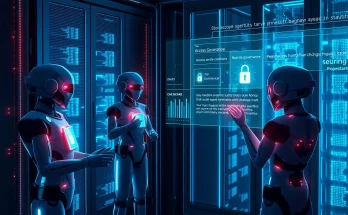
The enterprise landscape is undergoing a fundamental transformation as artificial intelligence evolves from passive chatbots into autonomous agents. While the first wave of generative AI focused on answering questions and generating text, the current “agentic” wave enables AI to take action—booking meetings, writing code, and executing multi-step workflows across various software applications. However, this increased autonomy brings a new category of risk that Microsoft executives are now calling the “double agent” problem.
Microsoft recently unveiled its strategy to combat these risks with the launch of the Microsoft 365 E7 Frontier Suite. This new licensing tier is designed specifically for organizations that want to deploy high-functioning AI agents while maintaining strict security and governance. At the heart of this announcement is the warning that an ungoverned AI agent, possessing the credentials and access of a high-level employee, could inadvertently or maliciously leak data, bypass security protocols, or be manipulated by outside actors to work against its own company.
What is an AI Double Agent?
In the context of modern cybersecurity, a “double agent” is an AI system that has been granted too much autonomy without sufficient oversight. Because these agents operate with the identity of a human user, they can access sensitive databases, send emails, and modify files. If an attacker uses prompt injection or exploits a vulnerability in the agent’s logic, they can effectively “turn” the agent, forcing it to exfiltrate proprietary information or perform unauthorized transactions.
Charlie Bell, Microsoft’s Executive Vice President of Security, has emphasized that identity and access management are the primary battlegrounds for agentic AI. Unlike a standard software tool, an agent “thinks” and “acts.” If its boundaries aren’t clearly defined, it becomes a liability. This risk is particularly high in modern SaaS workflows where agents are integrated across multiple platforms, creating a wider attack surface for potential exploitation.
The Microsoft 365 E7 Frontier Suite: A $99 Premium
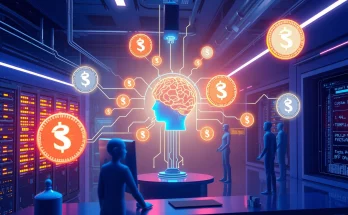
To address these complexities, Microsoft has introduced the Microsoft 365 E7 tier, priced at $99 per user, per month. This suite represents the most significant change to Microsoft’s commercial packaging in years. It is designed to be the “forcing function” that moves AI from a trial add-on to a core enterprise standard. The E7 suite is a comprehensive bundle that includes:
- Microsoft 365 E5: The previous top-tier productivity and security suite.
- Microsoft 365 Copilot: The flagship AI assistant integrated into Word, Excel, and Teams.
- Agent 365: A new control plane for managing, monitoring, and auditing AI agents.
- Entra Suite: Advanced identity and access management tools to ensure agents only perform permitted actions.
While the $99 price tag may seem steep, Microsoft argues that the cost of “shadow AI”—employees using ungoverned agents in secret—is far higher. By bundling governance tools with the models themselves, the E7 suite aims to provide a “single pane of glass” for IT departments to supervise every action an AI agent takes within the corporate environment.
Work IQ and Agent 365: The Governance Layer
A critical component of this new security push is Work IQ, an intelligence layer that acts as the brain for enterprise governance. Work IQ provides the visibility necessary to prevent “double agent” scenarios. It tracks the “reasoning” of an agent, documenting why a specific action was taken and which data sources were consulted. This creates an audit trail that is essential for compliance in regulated industries like finance and healthcare.
Complementing Work IQ is Agent 365, which functions as the management console for an organization’s entire AI workforce. Through Agent 365, administrators can set “guardrails” for autonomous agents. For example, an agent can be permitted to analyze sales data but strictly forbidden from sharing that data outside of the corporate domain. This centralized control is intended to mirror the way AI coding agents are managed in secure development environments, ensuring that automation does not lead to a loss of architectural integrity.
Strategic Collaboration: Copilot Cowork and Anthropic
Perhaps the most surprising aspect of Microsoft’s recent “Wave 3” update is the deep integration of Anthropic’s Claude models. While Microsoft has historically been synonymous with OpenAI, the company is now embracing a multi-model approach to improve agent reliability. Copilot Cowork, a new feature within the M365 ecosystem, leverages Anthropic’s technology to handle long-running, multi-step tasks.
The collaboration with Anthropic is a strategic move to provide “agentic harnesses”—specialized frameworks that allow AI to plan and execute complex work without getting lost in loops or hallucinations. By offering Claude alongside GPT-4 and GPT-5 models, Microsoft allows enterprises to choose the best “worker” for a specific job, all while keeping the data within the secure Microsoft Cloud perimeter.
Best Practices for Securing Enterprise AI
Deploying the E7 suite is only the first step in a broader security strategy. To truly defend against the risk of “double agents,” organizations should adopt the following principles:
1. Implement Least Privilege Access
Just as a human intern shouldn’t have access to the company’s financial records, an AI agent should only have access to the specific data it needs to perform its task. Using Microsoft Entra, administrators can create specific identities for agents, limiting their scope of movement within the network.
2. Continuous Monitoring and Auditing
Because AI behavior can be non-deterministic, static security rules aren’t enough. Real-time monitoring through Work IQ allows security teams to spot anomalies—such as an agent suddenly requesting access to thousands of files—before a data breach occurs.
3. Human-in-the-Loop Verification
For high-stakes actions, such as authorizing payments or changing system configurations, a human should always be required to sign off on the agent’s plan. This ensures that the AI remains an assistant rather than a rogue actor.
The Future of the AI Workforce
The rise of the $99 E7 tier marks the end of the “experimentation” phase of generative AI. We are entering an era of operational AI, where autonomous agents are treated as digital employees. This transition requires a shift in mindset from “how do we use this tool?” to “how do we manage this workforce?”
Microsoft’s warning about “double agents” is a reminder that the convenience of automation must always be balanced with the rigor of security. As companies like NVIDIA and Google also push toward agentic systems, the battle for the enterprise will be won not just by the most capable models, but by the most secure environments. For organizations willing to pay the premium, the E7 suite offers a roadmap for navigating this frontier safely, ensuring that their AI remains a loyal asset rather than a hidden threat.