The End of the Sora Era: Why OpenAI Is Pulling the Plug
Just months after it seemed poised to revolutionize the film and advertising industries, OpenAI has officially announced the discontinuation of Sora, its text-to-video generation platform. The move has sent shockwaves through the tech community, marking a definitive end to one of the most viral AI projects in history. While Sora’s photorealistic clips once dominated social media feeds, the reality of maintaining such a tool has proven incompatible with OpenAI’s broader roadmap for 2026.
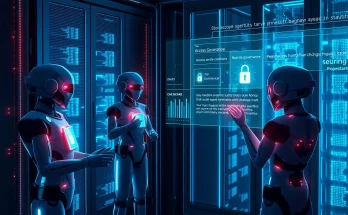
The decision to shutter Sora is not merely a technical retreat but a calculated strategic pivot. As the company prepares for a massive public debut, it is clearing the decks of high-risk, high-cost experimental projects. By redirecting its vast compute resources and talent toward Agentic AI and enterprise-grade tools, OpenAI is signaling a shift from consumer hype to business-focused reality.
The Safety Dilemma: Deepfakes and Ethical Risks
One of the primary drivers behind the shutdown is the mounting pressure regarding digital safety. Sora’s ability to create indistinguishable-from-reality video content raised immediate alarms about its potential for spreading misinformation. With global focus intensifying on the ethics of synthetic media, OpenAI faced a significant reputation risk that could have jeopardized its upcoming IPO.
Reports indicate that internal concerns over deepfakes were a major factor, especially following the collapse of high-profile content partnerships. The risk of the tool being used to influence elections or create non-consensual content was deemed too high for a company seeking to become the backbone of the global AI infrastructure. To mitigate these types of risks across its other platforms, OpenAI recently moved to acquire cybersecurity startup Promptfoo, emphasizing a “safety-first” approach for its future autonomous agents.
The Financial Reality: $15 Million Daily Losses
Beyond ethics, the sheer cost of running Sora was becoming unsustainable. Generating high-definition video requires a staggering amount of GPU compute power—far more than text or image generation. Industry analysts estimate that Sora was incurring daily operational losses of approximately $15 million. In an era where investors are demanding a clear path to profitability, burning billions on a tool with unclear monetization was a difficult sell.
This financial discipline is closely tied to SoftBank’s recent involvement. With a fresh US$40 billion loan and investment from the Japanese conglomerate, OpenAI is under strict directives to optimize its resources. SoftBank’s capital is intended to bridge the gap toward a 2026 IPO, and a resource-heavy project like Sora was seen as a liability rather than an asset. By freeing up these resources, the company can focus on scaling its reasoning models and “world simulation” for robotics.
Redirecting Resources to Agentic AI and Robotics
The resources once dedicated to Sora are not simply being cut; they are being reallocated. OpenAI is betting the house on Agentic AI—systems that don’t just generate content but can perform complex tasks autonomously. This shift reflects a broader industry trend where “AI that acts” is seen as more valuable than “AI that shows.”
World Simulation for Physical Systems
Interestingly, the research behind Sora’s video generation—specifically how it understands 3D space and physics—is being folded into OpenAI’s robotics division. Instead of making movies, the technology will now help train the next generation of humanoid robots to navigate and interact with the physical world. This “world model” approach is crucial for building AI that can safely operate in factories, warehouses, and homes.
The Push for Enterprise Dominance
OpenAI is also doubling down on its Frontier Alliances with global consulting giants like McKinsey and BCG. The goal is to move from experimental AI pilots to full-scale production environments. Enterprise customers are less interested in making viral videos and more focused on coding agents, automated research, and supply chain optimization. This strategic shift is part of why CEO Sam Altman has been more vocal about a Pentagon partnership and other government-level collaborations that prioritize national security and infrastructure over creative media.
The Path to a 2026 IPO
Every move OpenAI makes in 2026 is viewed through the lens of its impending public offering. With a valuation currently hovering around $750 billion, the stakes are unprecedented. To justify such a valuation, the company must prove it can manage costs, handle sensitive safety issues, and dominate the enterprise sector.
- Resource Optimization: Redirecting H100 and B200 clusters from video rendering to training GPT-5 and reasoning models.
- Risk Mitigation: Removing the threat of “Sora-style” deepfakes from the corporate balance sheet.
- Revenue Focus: Prioritizing API growth and enterprise “Workspaces” over free consumer apps.
While Sora may be gone, its legacy remains. The advancements made in temporal consistency and physics-based rendering will undoubtedly surface in future products, albeit in a more controlled and business-oriented fashion. For now, the dream of a “Hollywood in a box” from OpenAI has been paused in favor of a more pragmatic, agentic future.
Conclusion: A Necessary Retreat
The shutdown of Sora is a sobering reminder that even the most impressive technology must eventually bow to the realities of economics and safety. For OpenAI, the decision reflects maturity—a move away from the “move fast and break things” era toward becoming a stable, public-ready tech titan. As the company leans into its partnership with SoftBank Group and scales its autonomous agents, the industry will be watching to see if this pivot pays off in the race for AGI.