The Evolution of Siri: Moving Beyond Voice Commands
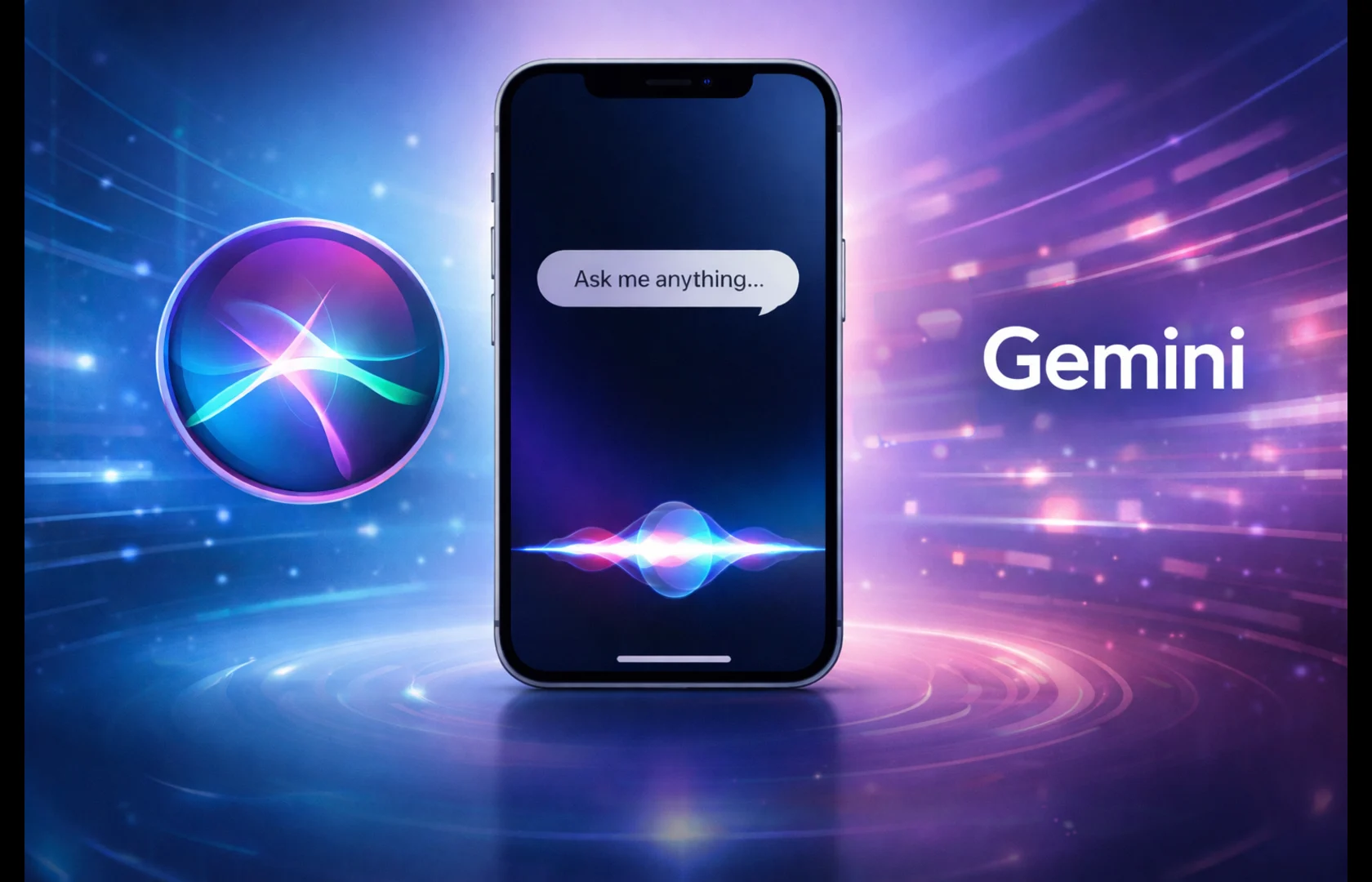
For over a decade, Siri has been the primary interface for millions of users looking to set timers, send texts, or check the weather. Since its integration into the iPhone 4s in 2011, the assistant has seen incremental improvements, but it often lagged behind the rapid advancements of modern large language models. This February, Apple is set to close that gap by reportedly launching a revamped, Gemini-powered Siri. This update represents more than just a software patch; it is a fundamental shift in how Apple approaches artificial intelligence, moving from a rigid, intent-based system to a fluid, reasoning-based companion.
The decision to integrate Google’s Gemini AI into the core Siri experience highlights Apple’s strategic pragmatism. While the company continues to develop its own Apple Foundation Models, leveraging the massive “world knowledge” of established models like Gemini allows Siri to answer complex questions that require deep reasoning and real-time information retrieval beyond the scope of local device data. This dual-layered approach ensures that Siri remains fast and private for daily tasks while gaining the intellectual horsepower to compete with standalone AI apps.
How Gemini Enhances the Siri Experience
The upcoming February release is expected to transform Siri into a more conversational and contextually aware assistant. By tapping into Gemini, Siri will be able to handle “world knowledge” queries that were previously its weak point. For example, users can ask for detailed travel itineraries, deep explanations of scientific concepts, or creative writing assistance, all within the familiar Siri interface.
Key New Capabilities
- Enhanced Reasoning: Siri will be able to follow multi-step instructions and maintain context throughout a conversation, reducing the need for users to repeat themselves.
- Advanced Writing Tools: Integration with Gemini will power sophisticated proofreading, tone adjustments, and content generation directly through voice commands.
- Real-time Image Understanding: Users will be able to point their cameras at objects and ask Siri for detailed information, powered by Gemini’s multimodal capabilities.
- Seamless Knowledge Access: When on-device intelligence reaches its limit, Siri will offer to consult Gemini for broader insights, ensuring users get the most accurate answers available.
This development is part of a broader trend where mobile operating systems are becoming wrappers for powerful AI ecosystems. Just as autonomous AI agents are revolutionizing how developers write code, the integration of Gemini into iOS is set to revolutionize how everyday consumers interact with their smartphones.
Privacy Architecture: The Apple Intelligence Shield
One of the primary concerns with integrating third-party AI like Gemini is data privacy. Apple has addressed this by positioning Apple Intelligence as a gatekeeper. Most requests will still be processed on-device using Apple’s custom silicon. For requests that require more power, Apple utilizes Private Cloud Compute (PCC), a breakthrough cloud intelligence system designed for private AI processing.
When a user asks a question that requires Gemini’s help, Apple’s system strips away personal identifiers and asks for explicit permission before sending the request to Google’s servers. This ensures that Google does not see the user’s identity or build a profile based on their Siri interactions. Furthermore, Apple has mandated that data sent to Gemini cannot be stored or used to train Google’s models, maintaining the high standard of privacy that Apple users expect.
The Role of Private Cloud Compute
Private Cloud Compute is the backbone of this hybrid model. It allows Apple to run larger foundation models on servers powered by Apple silicon while providing the same security guarantees as an iPhone. By combining on-device processing, PCC, and third-party integrations like Gemini, Apple is creating a “privacy-first” AI stack that provides the benefits of the cloud without the traditional risks of data exposure.
The Competitive Landscape: Apple vs. The AI Giants
The February launch of Gemini-powered Siri is a clear response to the growing dominance of Google’s own Pixel devices and the rapid rise of ChatGPT. For years, critics argued that Apple was falling behind in the AI race. By partnering with Google, Apple effectively neutralizes one of its biggest competitors’ advantages while buying time to further develop its internal “Siri 2.0” models, which are rumored to be entirely Apple-developed and conversational in future iOS versions.
This partnership is a win-win for both tech giants. For Google, it places Gemini on hundreds of millions of iPhones, significantly expanding its user base and data feedback loop (within Apple’s privacy constraints). For Apple, it provides an immediate, high-quality solution to Siri’s intelligence problem, keeping users within the iOS ecosystem rather than forcing them to rely on third-party apps for their AI needs.
What to Expect in the February Update
While the Gemini integration is the headline feature, the February iOS update is expected to include several other “Agentic AI” features. These include better App Intents, which allow Siri to take actions across different apps—such as finding a specific photo and then editing it in a third-party application before sending it via email. This level of cross-app functionality has been a long-promised feature of the modern smartphone, and the combined power of Apple’s operating system hooks and Gemini’s reasoning might finally make it a reality.
Hardware compatibility will remain a key factor. Because of the heavy computational requirements for running on-device LLMs and managing the hand-off to the cloud, these features will likely be restricted to the latest iPhone models equipped with the A17 Pro chip or newer. This hardware-software synergy is part of Apple’s strategy to encourage upgrades while ensuring the AI performance remains snappy and reliable.
The Future of Personalized Intelligence
Looking ahead, the integration of Gemini is likely just the first of many third-party partnerships. Apple has signaled that it intends to offer users a choice of AI models, much like they can choose their default search engine. Whether it is Gemini, ChatGPT, or specialized medical AI models, Siri is evolving into a central hub for personal intelligence.
As we move closer to the February release, the focus will shift from “what can AI do?” to “how can AI help me specifically?” With the ability to tap into a user’s personal context—like their calendar, emails, and messages—Siri will be able to provide proactive suggestions that are truly useful. The Gemini-powered Siri isn’t just a smarter version of an old tool; it is the beginning of a new era where the smartphone becomes a proactive assistant that understands the world as well as it understands its user.