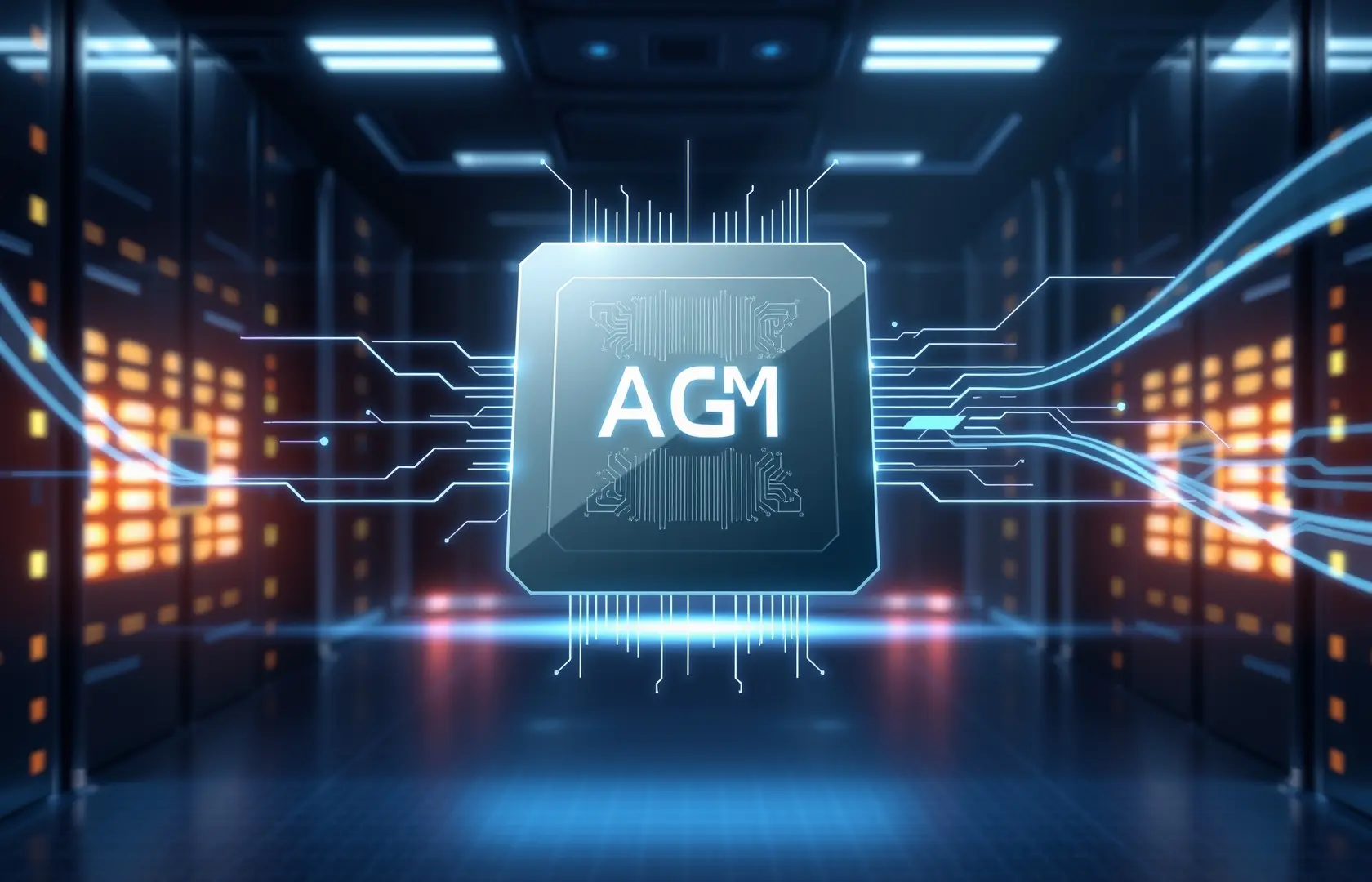
The global semiconductor landscape has reached a historic turning point as Arm Holdings officially unveiled its first-ever specialized data center processor, the Arm AGI CPU. Specifically engineered to power the burgeoning field of “Agentic AI,” this launch represents a fundamental shift in Arm’s business model—moving from a company that primarily licenses architecture to one that provides finished, high-performance silicon for the world’s largest data centers.
The announcement has sent ripples through the industry, supported by a heavy-hitting coalition of partners including Meta, Google, and Nvidia. As the industry pivots from passive chatbots to autonomous agents capable of independent reasoning and multi-step task execution, the underlying hardware must undergo a radical evolution to keep pace.
The Dawn of Agentic Silicon
For decades, Arm’s influence was defined by the IP it licensed to giants like Apple and Qualcomm. However, the rise of agentic AI workflows has created a unique set of technical demands that traditional general-purpose CPUs and even standard AI accelerators often struggle to meet efficiently. Agentic AI refers to systems that don’t just generate text or images on command but instead function as autonomous entities that can plan, use software tools, and correct their own errors over long-running loops.
The Arm AGI CPU is designed to be the “orchestrator” for these complex cycles. Unlike standard generative AI, which typically involves a single prompt and a single response, agentic systems require continuous “thinking” loops. This puts immense pressure on a processor’s ability to manage context memory and maintain high energy efficiency over sustained periods of compute. Arm’s new chip claims to offer a 2x performance boost over traditional x86 architectures for AI inference, specifically targeting the orchestration layer where agents make decisions.
A Strategic Partnership with Meta
In a move that underscores the collaborative nature of this new era, Meta has emerged as the debut customer and co-developer for the Arm AGI CPU. Meta’s massive infrastructure needs have driven the company to seek more customized silicon solutions to reduce its reliance on off-the-shelf parts and lower the total cost of ownership for its AI services.
By integrating Arm’s first-ever in-house chip into its data centers, Meta aims to streamline the deployment of its Llama-based agents across Facebook, Instagram, and WhatsApp. This follows a broader trend of big tech companies diversifying their hardware stacks; for instance, the recent Meta and AMD partnership highlights how the social media giant is placing multiple bets on different silicon architectures to ensure peak efficiency.
The Role of Nvidia and Google
While Meta is the primary launch partner, the broader ecosystem support is equally significant:
- Nvidia: The GPU leader is integrating Arm’s architecture into its “Vera Rubin” platform. The Vera CPU, built on Arm’s latest designs, will work in tandem with Nvidia’s next-generation GPUs to handle the complex reasoning tasks required for agentic autonomous systems.
- Google: Through its cloud division, Google is looking to offer Arm AGI-based instances to developers building autonomous software, ensuring that the software layer in Google AI can leverage the hardware’s specialized instruction set.
Why Hardware Needs to Change for Agents
To understand why a specialized “AGI CPU” is necessary, one must look at the way autonomous agents operate. Standard AI chips are optimized for high-throughput inference—spitting out words as fast as possible. However, an agent needs to perform “tool use,” which involves calling APIs, checking the results, and deciding on the next step. This requires:
1. Superior Power Efficiency
Agentic tasks are often “always-on.” An agent tasked with managing a supply chain or performing software research might run for hours or days. Arm’s focus on power-per-watt is critical here; if every agentic “thought loop” consumes massive amounts of electricity, scaling these systems becomes economically and environmentally impossible.
2. Managing the Context Window
Agents must “remember” what they did three steps ago to successfully complete step four. This creates a massive demand for memory bandwidth and efficient management of the Key-Value (KV) cache. The Arm AGI CPU includes hardware-level optimizations to keep these context windows accessible without the latency penalties associated with moving data between the CPU and external memory.
3. Security and Sandboxing
When you give an AI agent the ability to “use your computer” or “access corporate data,” security becomes the top priority. Arm has integrated specialized hardware sandboxing into the AGI CPU, ensuring that autonomous agents can operate within restricted environments, preventing “jailbroken” agents from accessing sensitive system layers.
Market Impact and the Future of Arm
The market’s reaction to this pivot has been overwhelmingly positive. Following the unveiling at the “Arm Everywhere” event in San Francisco, the company’s stock saw a significant surge. Arm CEO Rene Haas has projected that the company’s revenue could reach $25 billion by 2031, with a substantial portion of that growth coming from direct silicon sales rather than just licensing fees.
This move places Arm in direct competition with long-time partners like Intel and AMD in the data center space. By moving up the value chain from blueprints to actual physical products, Arm is betting that its deep understanding of power efficiency is the key to winning the “Agentic Era.”
Conclusion: The Era of Autonomous Compute
The launch of the Arm AGI CPU is more than just a new piece of hardware; it is a signal that the AI industry is moving beyond the “chat” phase. We are entering an era of autonomous compute, where the machines we build will have the hardware-level support they need to act on our behalf with speed, safety, and efficiency.
With the backing of Meta, Nvidia, and Google, Arm has positioned itself at the very core of this transition. As these specialized chips begin to populate global data centers over the coming year, the gap between “Generative AI” and “Agentic AI” will only continue to widen, leading to a world where AI doesn’t just talk—it does.