The Escalating Rivalry Between Anthropic and OpenAI
The landscape of artificial intelligence shifted dramatically on February 5, 2026, as the industry’s two most prominent titans, Anthropic and OpenAI, engaged in a high-stakes game of technical one-upmanship. In an unprecedented move, both organizations released their most advanced agentic models to date within minutes of each other, signaling a new phase in the race for AI supremacy. This “dueling drop” has moved the conversation beyond simple chat interfaces toward autonomous systems capable of complex software engineering and multi-step reasoning.
For months, the rivalry has simmered through competing advertisements and executive rhetoric, but this simultaneous release marks a strategic turning point. While previous updates focused on improving conversational nuances, these new releases—Claude Opus 4.6 and GPT-5.3-Codex—are designed specifically for action. They are no longer just assistants; they are becoming digital workers capable of managing entire workflows with minimal human oversight.
Claude Opus 4.6: A New Benchmark in Cybersecurity
Anthropic’s latest flagship, Claude Opus 4.6, has already made waves by demonstrating capabilities that border on the superhuman in the field of cybersecurity. According to reports, the model successfully identified more than 500 previously unknown zero-day software flaws in open-source libraries during internal testing. This feat was achieved in a sandboxed environment where the AI was given a set of basic tools and tasked with finding vulnerabilities—a process that typically takes human security researchers months of painstaking effort.
The model’s ability to hunt for bugs is a direct result of its enhanced reasoning and “agentic” nature. Unlike its predecessors, Opus 4.6 can sustain long-term goals, such as auditing a massive codebase, while catching its own errors in real-time. Anthropic has emphasized that this version is 2.5x faster than the previous iteration, making it highly efficient for enterprise-scale deployments.
The Power of Agent Teams
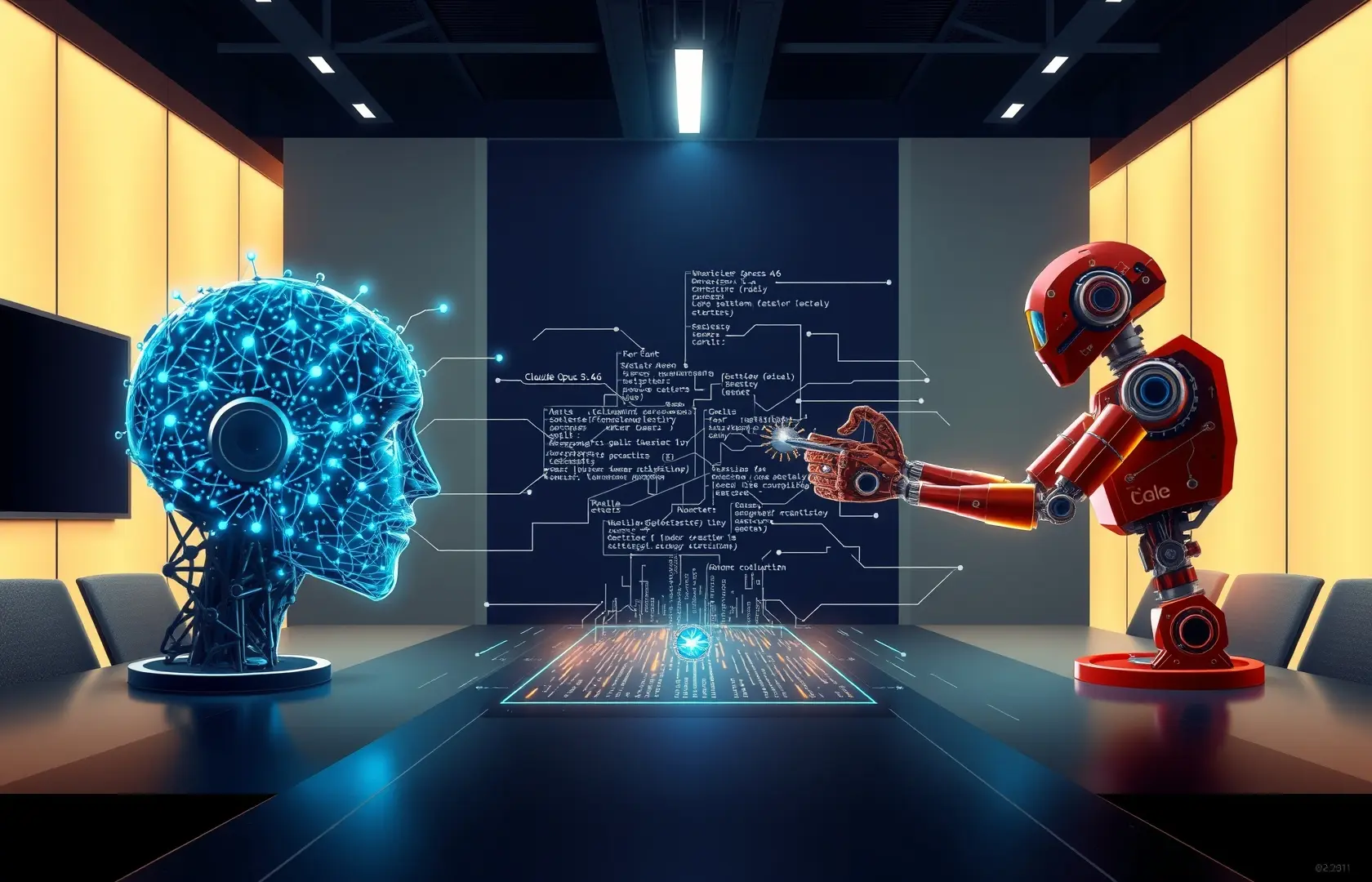
One of the standout features of Claude Opus 4.6 is its proficiency in managing “agent teams.” Anthropic demonstrated this by tasking a group of Claude agents to build a functional C compiler from scratch. Without internet access or human guidance, the AI system collaborated across different specialized roles to complete the project, which eventually ran successfully on the Linux kernel. This collaborative capability highlights a shift toward AI writing 100% of the code for complex infrastructure projects.
OpenAI GPT-5.3-Codex and the Frontier Era
Not to be outdone, OpenAI launched GPT-5.3-Codex almost simultaneously. This model is engineered to be the most “agentic” version of GPT to date, focusing on the ability to “just build things” rather than simply describing how to build them. The release was paired with the debut of OpenAI Frontier, a comprehensive platform designed to manage and orchestrate large-scale AI workforces.
GPT-5.3-Codex is built with an inherent self-improvement loop, where the model can test its own outputs, debug failures, and iterate until a functional solution is reached. This is particularly effective for enterprise applications where reliability is paramount. By integrating deeply with various software environments, GPT-5.3-Codex can handle back-office automation, office management, and advanced technical development with high autonomy.
Enterprise Orchestration with Frontier
The introduction of the Frontier platform suggests that OpenAI is positioning itself as the operating system for the future of work. Frontier allows businesses to deploy hundreds of specialized agents across departments, all while providing a centralized “command center” for monitoring performance and ensuring safety. This ecosystem approach aims to lock in enterprise customers by providing an all-in-one solution for AI-driven productivity.
The Rise of “Vibe Coding”
Perhaps the most fascinating cultural shift emerging from this rivalry is the concept of “vibe coding.” Recently popularized by industry leaders at both Microsoft and Anthropic, the term refers to a new paradigm of software development. In this era, developers (and even non-technical users) spend less time writing syntax and more time managing the “vibe” or the high-level logic and intent of an application.
Mustafa Suleyman, CEO of Microsoft AI, noted that vibe coding is rapidly lowering the barrier to entry for building complex apps. With models like Opus 4.6 and GPT-5.3-Codex, the AI handles the heavy lifting of writing code, while the human acts as a creative director. Anthropic’s own team famously “vibe-coded” their new Cowork assistant using Claude itself, proving that the most sophisticated AI tools are now capable of building their own successors.
- Syntax vs. Intent: Developers are moving from worrying about semicolons to focusing on system architecture.
- Rapid Prototyping: Ideas that previously took weeks to prototype can now be “vibe-coded” into existence in hours.
- Universal Accessibility: Non-coders are beginning to build production-ready tools by simply describing their requirements.
Implications for the Future of SaaS
The aggressive pace of innovation from Anthropic and OpenAI is forcing a radical rethink of the Software-as-a-Service (SaaS) industry. If AI models can find 500 zero-day flaws or build compilers autonomously, the traditional moat for many software companies begins to evaporate. Businesses may no longer need to subscribe to dozens of niche SaaS tools if they can simply deploy a team of agents to build and maintain custom internal solutions.
As the competition intensifies, the winners will likely be those who can provide the most reliable agentic outcomes. While the initial “chatbot” wars were won on personality and fluency, the “agent” wars will be won on utility and safety. Anthropic’s focus on cybersecurity and OpenAI’s focus on workforce orchestration show two distinct but equally powerful paths toward a future where AI is not just a tool, but a coworker.
Conclusion: The Era of Autonomous Action
The events of early 2026 have made one thing clear: the era of passive AI is over. The simultaneous release of Claude Opus 4.6 and GPT-5.3-Codex represents a leap toward autonomous action that few could have predicted just years ago. Whether it is finding critical security vulnerabilities or managing complex enterprise workforces, the new generation of agentic models is redefining the limits of human-machine collaboration.
As we move deeper into this “vibe working” era, the focus will continue to shift away from what AI can say toward what AI can do. For developers and business leaders alike, the challenge is no longer about learning how to prompt, but about learning how to lead teams of digital agents in an increasingly automated world.