The boundary between digital intelligence and physical reality is about to dissolve. OpenAI, the powerhouse behind ChatGPT, is officially stepping into the world of consumer electronics. With a projected debut in late 2026, the company’s first hardware device is not just another gadget; it is a calculated attempt to redefine how humans and machines coexist. By moving beyond the glowing rectangles of our smartphones, OpenAI aims to create an interface that feels more like an extension of the self than a tool in the pocket.
The Dawn of OpenAI Hardware: A 2026 Vision
For years, the tech industry has speculated about when OpenAI would transition from a software-first entity to a manufacturer. That question was answered with the revelation that the company is targeting the latter half of 2026 for its hardware reveal. This move follows a massive internal shift, as the organization seeks to own the entire stack—from the underlying neural networks to the physical housing that delivers them to the user. This strategy mirrors the early days of personal computing, where the most successful companies were those that tightly integrated their software with custom-built hardware.
The significance of this timeline cannot be overstated. By 2026, the current generation of large language models (LLMs) will have evolved into more “agentic” systems—AI that doesn’t just talk but acts. To fully realize the potential of these agents, they need sensory input from the physical world. This requires cameras, microphones, and sensors that aren’t restricted by the operating systems of existing smartphone giants. To support this massive undertaking, OpenAI’s strategy for US-based AI hardware supply is already in motion, ensuring that the physical components of this revolution are as robust as the code driving them.
The Altman-Ive Partnership: Redefining Consumer Tech
Perhaps the most exciting aspect of this project is the collaboration between OpenAI CEO Sam Altman and the legendary former Apple designer, Jony Ive. Ive, the man responsible for the aesthetic identity of the iPhone, iMac, and iPod, has been working quietly with Altman via his creative collective, LoveFrom. This partnership isn’t a mere consulting gig; it is a deep-rooted fusion of design and intelligence.
From Software to Physical Form: The “io” Acquisition
To solidify this collaboration, OpenAI reportedly acquired Ive’s secretive hardware startup, io, in a deal valued between $6 billion and $6.5 billion. This acquisition brought a specialized team of ex-Apple designers and engineers into the OpenAI fold. The goal of this “skunk-works” group is to create a device that provides a “new family of products” for the AI era. While smartphones were designed to capture and hold our attention, the Altman-Ive vision is reportedly centered on a “calmer” vibe—technology that assists without the intrusive nature of infinite scrolling and notification pings.
What We Know About the OpenAI Device
While official details remain shrouded in secrecy, leaks and industry reports have begun to paint a picture of what we can expect from the 2026 debut. The device is expected to be a radical departure from the traditional screen-heavy hardware of the last two decades.
Form Factor and Codename “Gumdrop”
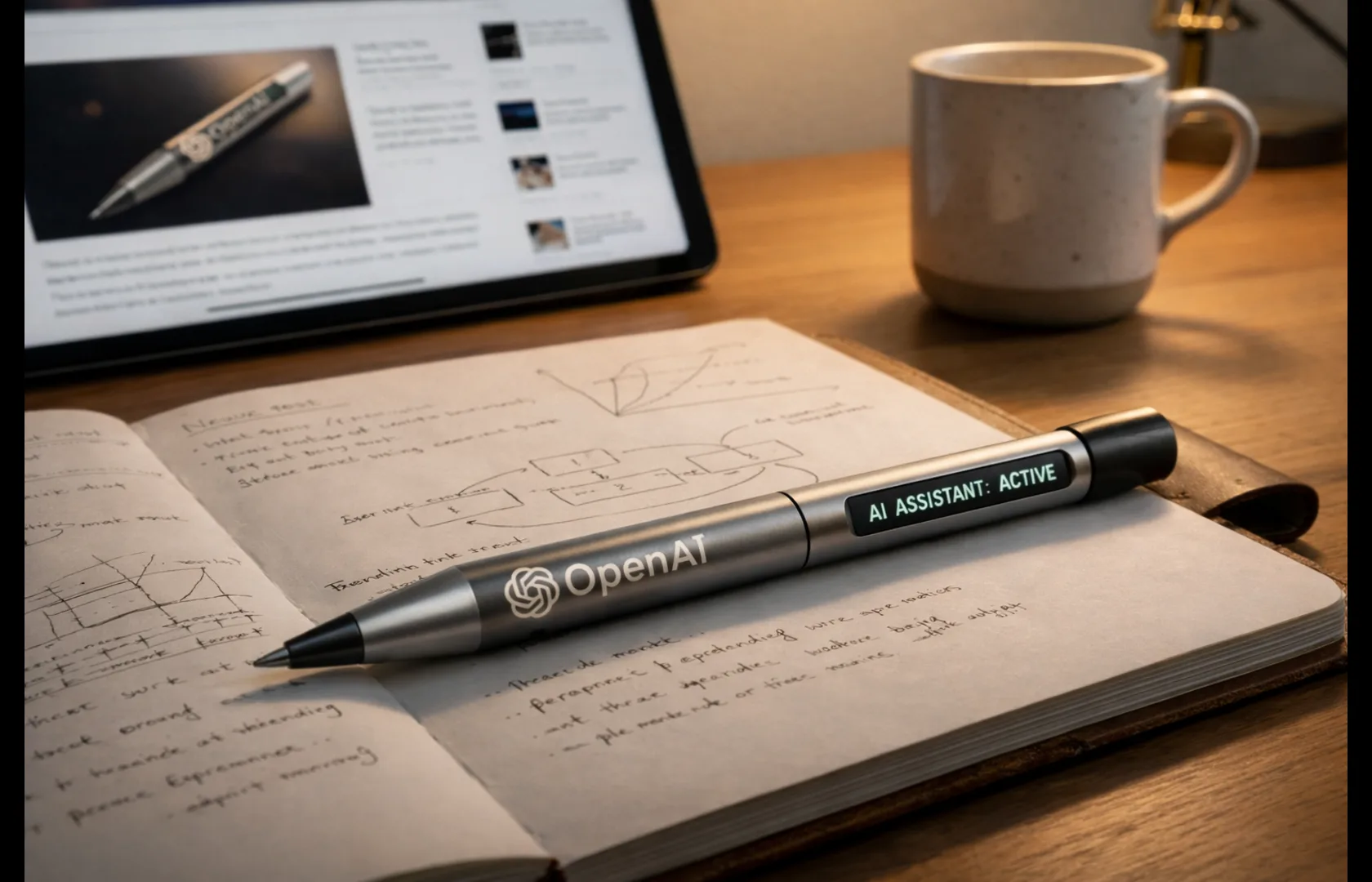
One of the more intriguing prototypes mentioned in industry circles is codenamed “Gumdrop.” This version of the device is rumored to be pen-shaped, functioning as a sophisticated input tool that can transcribe and analyze handwritten notes in real-time, syncing them directly with ChatGPT. Another rumored form factor is a wearable device meant to be worn around the neck or clipped to clothing. This “screenless” approach emphasizes voice and vision as the primary modes of interaction. With built-in cameras and microphones, the device would have “environmental awareness,” allowing it to see what the user sees and offer real-time assistance based on the physical context.
A Screen-Free “Vibe”
The central philosophy behind the OpenAI hardware is the removal of the screen. In various public appearances, Altman has expressed a desire to reduce our dependence on screens, which he views as a bottleneck for human-AI interaction. The 2026 device aims to be an “ambient” companion. Imagine walking through a grocery store and having your AI companion whisper nutritional facts or recipe suggestions based on what you are looking at, all without you ever having to look down at a phone. This vision aligns with OpenAI’s broader goal of making AI as intuitive as possible, a theme also explored in their work with OpenAI and Sam Altman’s Merge Labs.
Competing in a Crowded AI Wearables Market
OpenAI is not entering an empty room. The market for AI-centric hardware is already heating up, though it has seen as many failures as successes. To succeed in 2026, OpenAI must learn from those who came before them.
Lessons from Rabbit R1 and Humane AI Pin
The tech world saw a surge of AI hardware in 2024 and 2025, with products like the Rabbit R1 and the Humane AI Pin attempting to replace the smartphone. Most of these devices struggled with latency, poor battery life, and the “why do I need this?” factor. They often felt like expensive accessories for a phone rather than a replacement. OpenAI’s advantage lies in its massive user base and the sheer power of its models. If the 2026 device can offer a response speed and intelligence level that matches its desktop counterparts, it could overcome the hurdles that tripped up earlier pioneers.
Currently, the “gold standard” for AI wearables is largely held by Meta and their Ray-Ban smart glasses. By integrating AI into a form factor that people already wear and find stylish, Meta has captured a significant portion of the early adopter market. OpenAI’s challenge will be to create a device that is either more useful than smart glasses or so aesthetically pleasing—thanks to Jony Ive—that it becomes a new fashion icon.
The Technology Under the Hood
A beautiful design is nothing without the brains to back it up. The 2026 hardware will likely be the first device designed specifically to run the next generation of reasoning models. While current devices often struggle with “hallucinations” or slow processing times, the OpenAI device will likely utilize edge computing combined with ultra-low-latency cloud connectivity. This will allow for fluid, conversational interactions that feel human. The device will likely be powered by a specialized AI processor, potentially designed in-house or in partnership with industry leaders like NVIDIA or SoftBank, to ensure it can handle the heavy compute requirements of multimodal AI.
Looking Ahead: The Impact on the Smartphone Era
As we approach the 2026 launch, the primary question remains: Can a screenless AI device truly replace the smartphone? While the iPhone consolidated our cameras, music players, and maps into one device, the OpenAI hardware aims to consolidate our intentions. Instead of navigating through apps, we will simply express a need, and the AI will handle the logistics.
The debut of OpenAI’s first device will mark a pivotal moment in tech history. It represents the first serious threat to the app-store economy that has dominated the last twenty years. If successful, the partnership between the world’s most advanced AI laboratory and its most celebrated designer could usher in a new era of “invisible” technology—where the device disappears, and only the intelligence remains. The world will be watching in 2026 to see if OpenAI can catch lightning in a bottle once again, this time in a form we can hold in our hands.