The State of Artificial Intelligence in 2026
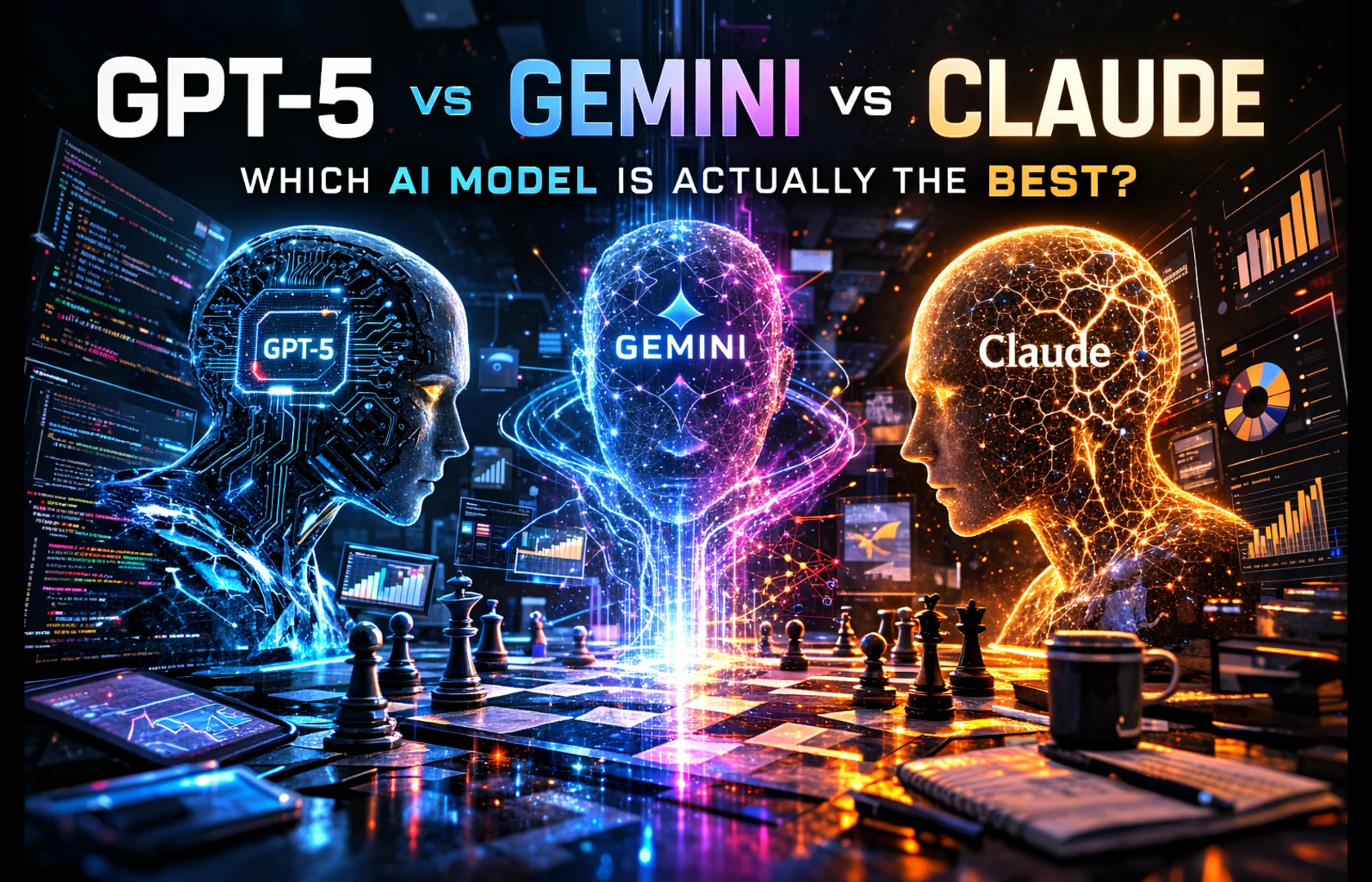
The landscape of large language models (LLMs) has shifted from simple chatbots to sophisticated agentic systems capable of executing complex tasks autonomously. As we move through 2026, the “Big Four” — OpenAI, Google, Anthropic, and xAI — have each carved out distinct identities. Choosing the right AI no longer depends on who has the largest parameters, but rather on which ecosystem fits your specific workflow, whether it is deep scientific research, enterprise-level coding, or real-time social media analysis.
The competition has moved beyond text generation into the realm of “native multimodality” and “computer use.” In this environment, models do not just talk; they act. From managing financial portfolios to debugging entire codebases in minutes, the current generation of frontier models represents the most significant leap in productivity since the dawn of the internet.
OpenAI GPT-5: The King of Reasoning and Agents
OpenAI remains the industry benchmark with the rollout of GPT-5 and its subsequent iterations. The focus here has shifted entirely toward “extreme reasoning.” Unlike its predecessors, GPT-5 uses a more advanced chain-of-thought architecture that allows it to pause and “think” before responding, significantly reducing hallucinations in complex logical tasks.
Agentic Capabilities and Computer Use
One of the standout features of the latest OpenAI ecosystem is its ability to interact with desktop environments. With the introduction of OpenAI GPT-5.4, the model can now perform “native computer use,” meaning it can navigate software, click buttons, and manage files just like a human user. This has transformed ChatGPT from a writing assistant into a full-blown digital employee.
- Best For: Complex problem solving, autonomous agents, and creative brainstorming.
- Key Strength: The most intuitive user interface and the widest array of third-party integrations via the OpenAI Store.
- Latest Update: Integration of Sora for native video generation directly within the chat interface.
Google Gemini 3.0: The Multimodal Powerhouse
Google has leveraged its massive data ecosystem to make Gemini 3.0 the most integrated AI on the market. By weaving Gemini into every facet of the Google Workspace, the company has created an AI that knows your schedule, your emails, and your documents better than any competitor.
The Workspace Integration Advantage
The true power of Gemini lies in its ability to process massive amounts of information across different formats simultaneously. While other models might struggle with a 2-hour video or a 1,000-page PDF, Gemini’s expanded context window handles these with ease. For developers, tools like the Google Workspace CLI allow for a unified interface where AI agents can manage organizational data across Sheets, Docs, and Gmail with high precision.
- Best For: Enterprise users heavily invested in the Google ecosystem and those requiring large-scale data analysis.
- Key Strength: Massive context window (up to 10 million tokens in experimental tiers) and seamless integration with Android and Chrome.
- Latest Update: Gemini Live 2.0, providing ultra-low latency voice interactions that feel indistinguishable from human conversation.
Anthropic Claude 4: The Developer’s Choice for Precision
Anthropic has doubled down on its “safety-first” philosophy, but in 2026, that safety has evolved into reliability. Claude 4 and Claude 4.5 are widely considered the most “human-sounding” models, avoiding the robotic tone sometimes found in GPT. However, where Claude truly shines is in technical and scientific fields.
Claude Code and Technical Mastery
The release of Claude Code has revolutionized software engineering. While other models can write snippets, Claude can refactor entire repositories while maintaining strict adherence to safety protocols and coding standards. Its ability to provide a “Chain-of-Thought” view allows users to see exactly how the AI reached a conclusion, which is vital for legal and medical professionals who require audit trails.
- Best For: Software engineering, legal research, and long-form writing that requires a nuanced, “human” touch.
- Key Strength: Exceptional adherence to complex instructions and the highest benchmark scores in coding and mathematics.
- Latest Update: Interactive artifacts that allow users to render code, charts, and websites in a dedicated side-window.
xAI Grok 4: Real-Time Data and the Edgy Factor
Elon Musk’s xAI has positioned Grok 4 as the “anti-woke” alternative, designed to answer questions that other models might dodge due to safety filters. But beyond the marketing, Grok has a massive technical advantage: real-time access to the global conversation on X (formerly Twitter).
The Real-Time Intelligence Gap
While OpenAI and Google rely on web indexing that can sometimes be minutes or hours old, Grok processes live data streams. This makes it the premier tool for news junkies, financial traders, and social media managers who need to know what is happening right now. The introduction of Grok 4 Heavy, a model trained on the Colossus supercluster, has brought Grok’s reasoning capabilities on par with GPT-5 for the first time.
- Best For: Real-time news analysis, social media monitoring, and users who prefer a “raw,” unfiltered AI personality.
- Key Strength: The fastest access to breaking news and a uniquely edgy “fun mode” personality.
- Latest Update: Premium $300/month tiers for specialized high-compute tasks and exclusive early access to new features.
Comparison Table: 2026 AI Benchmarks
To help you decide which model fits your needs, here is a breakdown of how they perform across major categories in the current 2026 environment:
- Reasoning & Logic: GPT-5 (Winner), Claude 4 (Runner-up)
- Coding & Development: Claude 4 (Winner), GPT-5 (Runner-up)
- Multimodal Processing: Gemini 3.0 (Winner), GPT-5 (Runner-up)
- Real-Time Information: Grok 4 (Winner), Gemini 3.0 (Runner-up)
- User Experience: GPT-5 (Winner), Claude 4 (Runner-up)
Which AI Should You Use?
The “best” AI is now entirely subjective based on your goals. If you are a developer or a technical writer, Anthropic Claude offers the most reliable and precise output. If you are an enterprise leader looking to automate office workflows, Google Gemini is the logical choice due to its Workspace deep-linking.
For those who want the smartest all-around assistant and the best ecosystem of apps and agents, OpenAI ChatGPT remains the gold standard. Finally, for those who need up-to-the-second data and want an AI that isn’t afraid to be controversial, xAI Grok provides a unique and powerful alternative.
As we look toward the second half of 2026, the lines between these models will continue to blur. However, the move toward agentic behavior ensures that regardless of which you choose, you are no longer just using a tool — you are collaborating with a digital partner.