The Evolution of Autonomous Productivity
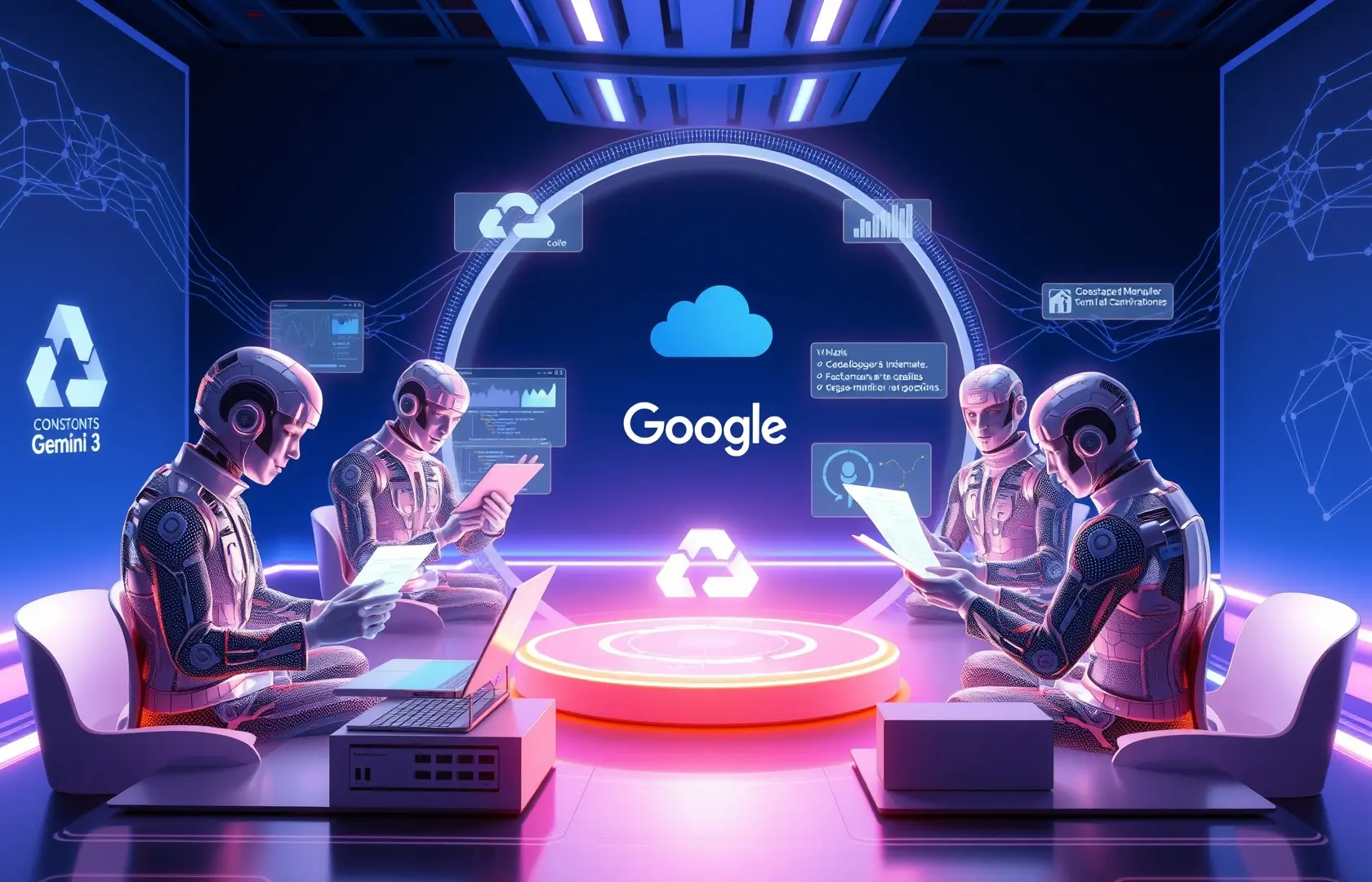
The transition from passive AI assistants to active autonomous agents represents one of the most significant shifts in the modern enterprise landscape. While early iterations of generative models were focused on generating text and answering questions, the latest developments from Google Cloud emphasize a new objective: building an AI workforce. Through the “Agent Factory” initiative, organizations are now moving beyond simple chat interfaces to deploy sophisticated agents capable of reasoning, using tools, and completing multi-step business processes independently.
At the heart of this transformation is Gemini 3, a model designed from the ground up to support “agentic” workflows. Unlike its predecessors, which primarily functioned as conversational partners, Gemini 3 is built for action. It possesses the reasoning depth required to understand complex objectives and the technical infrastructure to interact with external databases, APIs, and software environments. For businesses, this means the ability to create digital employees that can manage customer service tickets, write and debug code, and optimize supply chains with minimal human intervention.
Key Features of Gemini 3 for Enterprise Agents
To build a reliable AI workforce, a model must be more than just intelligent; it must be grounded, fast, and capable of high-fidelity reasoning. Gemini 3 introduces several key breakthroughs that make it the ideal engine for the Agent Factory:
- Advanced Agentic Reasoning: The model can break down a broad goal into specific, actionable steps, anticipating potential roadblocks and adjusting its strategy in real-time.
- Multimodal Native Processing: Gemini 3 can process and act upon information from text, images, video, and audio simultaneously. This allows agents to “see” a user’s screen to provide technical support or “hear” a customer’s tone to adjust their response.
- Massive Context Windows: With the ability to process millions of tokens, agents can maintain a complete understanding of a company’s entire codebase or documentation library, ensuring every action is perfectly aligned with internal standards.
- Agentic Coding with Antigravity: By integrating with tools like the Antigravity IDE, Gemini 3 transforms from a code suggestor into a full-fledged software engineer that can manage entire repositories.
For more insights into how vision plays a role in these models, explore the agentic vision in Gemini 3 Flash and its impact on real-world actions.
Building with Vertex AI Agent Builder
The “Agent Factory” isn’t just a conceptual framework; it is a practical methodology powered by Vertex AI Agent Builder. This platform allows developers to create and deploy agents without the need for deep machine learning expertise. By using a “no-code” or “low-code” approach, teams can define the personality, knowledge base, and toolsets of an agent in minutes.
Grounding and Factuality
One of the primary concerns for any business deploying AI is the risk of “hallucinations.” Google addresses this through Grounding with Google Search and enterprise data. By connecting Gemini 3 to a company’s internal datasets—such as manuals, CRM records, and product catalogs—the Agent Factory ensures that every response is backed by a verifiable source. This provides a level of factuality that is essential for customer-facing roles.
Tool Use and API Integration
An agent is only as useful as the tools it can access. Through the Cloud API Registry, developers can grant agents permission to interact with specific software. For instance, a logistics agent could be given access to a shipping API to track orders, or a marketing agent could be connected to a social media scheduler. This “tool-use” capability allows the AI to move from “knowing” to “doing.”
Scaling the AI Workforce: Real-World Use Cases
As organizations adopt the Agent Factory approach, several high-impact use cases have emerged that demonstrate the power of a digital workforce. These are not just experimental pilots; they are production-ready systems changing how work gets done.
Customer Experience and Support
Traditional chatbots often frustrate users by failing to understand context or being unable to take action. Gemini-powered agents, however, can handle the entire lifecycle of a customer query. They can authenticate a user’s identity, look up their purchase history, and even process a refund or schedule a repair without ever needing to escalate to a human representative.
Software Engineering and Operations
The concept of “vibe coding” and agentic development is revolutionizing the IT sector. Agents can now monitor system health and, upon detecting a bug, automatically generate a fix, test it in a sandbox environment, and submit a pull request for review. This allows human developers to focus on architecture and innovation rather than maintenance.
Data Synthesis and Strategy
For executive teams, Gemini 3 agents can act as high-level research assistants. They can digest thousands of pages of market reports, financial statements, and competitor news to identify emerging trends. By synthesizing this data into a cohesive strategy, they empower human leaders to make more informed decisions faster than ever before.
Governance and the Human-in-the-Loop
Building an AI workforce requires robust governance. Google Cloud has implemented Enhanced Tool Governance within Vertex AI to ensure that agents operate within strictly defined boundaries. Administrators can control exactly which tools an agent can use and set “human-in-the-loop” checkpoints for sensitive actions, such as authorizing large financial transactions or publishing public-facing content.
This hybrid approach ensures that while the AI handles the heavy lifting, humans remain the ultimate decision-makers. The goal of the Agent Factory is not to replace the human workforce, but to augment it, removing the burden of repetitive tasks and allowing employees to engage in more creative and meaningful work.
Getting Started with the Agent Factory
The journey toward an AI-powered enterprise begins with experimentation. Google offers several pathways for businesses to start building today. Google AI Studio provides the fastest environment for prototyping agentic prompts, while Vertex AI offers the enterprise-grade security and scalability needed for global deployment.
For those ready to dive into the technical details, visiting the official Google Cloud portal offers access to documentation, tutorials, and the Agent Engine overview. Organizations can also explore the specific capabilities of Google DeepMind to understand the research driving these advancements.
The era of the AI workforce is no longer a future prediction; it is a present reality. By leveraging the power of Gemini 3 and the Agent Factory, businesses can achieve levels of scale and efficiency that were previously thought impossible. The only question remaining for leaders is how quickly they can integrate these digital colleagues into their existing operations.