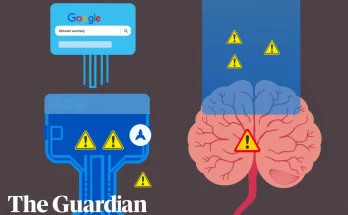
The Evolution of Search into AI-Generated Advice
When searching for a persistent headache or a sudden rash, the instinct for millions is to turn to a search engine. For decades, this process involved a list of links to reputable medical websites. However, the introduction of AI Overviews by Google has shifted this paradigm. Instead of a list of sources, users are now greeted with a synthesized paragraph of information that claims to provide a direct answer. While this is convenient for simple questions like “how to boil an egg,” the stakes are dramatically higher when the topic is human health.
A recent investigation by The Guardian has highlighted a disturbing trend: these AI-generated summaries are frequently providing misleading or flat-out dangerous health advice. This phenomenon, often referred to as “hallucination,” occurs when large language models (LLMs) present false information with absolute confidence. For patients seeking urgent medical clarity, these errors are not just technical glitches—they are public health risks.
How AI Hallucinations Compromise Medical Safety
AI models do not “understand” medicine in the way a doctor does. Instead, they predict the next likely word in a sentence based on patterns found in massive datasets. When these datasets include unverified forum posts, satirical articles, or outdated medical journals, the AI can inadvertently blend fact with fiction. For example, reports have shown AI Overviews suggesting harmful home remedies or misinterpreting the severity of symptoms for conditions like sepsis or cardiac distress.
The problem is compounded by the way these summaries are presented. Unlike traditional search results that require a user to click and evaluate a source, the AI Overview sits at the very top of the page, often in a highlighted box. This placement suggests a level of authority and endorsement that the underlying technology has not yet earned. When a user sees a concise medical recommendation from a multi-billion-dollar tech giant, they are naturally inclined to trust it, often bypassing the traditional “doctor-verified” links below.
To understand the technical shift behind these changes, you can read more about how Google introduced AI mode and expanded AI overviews across its platform.
The Response from the Medical Community
Medical professionals and global health organizations have expressed growing alarm. The American Medical Association (AMA) has emphasized that AI should be a tool for clinical support rather than a replacement for professional consultation. Experts argue that medicine is a field of nuance, where a patient’s history, lifestyle, and physical examination are critical to a diagnosis—elements that an algorithm cannot see or weigh.
Key Concerns Raised by Doctors:
- Lack of Accountability: When an AI gives bad advice, there is no medical board to hold it accountable, unlike a licensed physician.
- Omission of Critical Nuance: AI often overlooks the “red flags” that would prompt a doctor to send a patient to the emergency room.
- Erosion of Trust: Misleading information can lead patients to delay life-saving treatment or attempt dangerous at-home procedures.
Organizations like the World Health Organization (WHO) are calling for stricter regulations on how tech companies serve medical information. They suggest that health-related queries should be subject to much higher accuracy thresholds than general search queries, yet the rapid rollout of generative AI has often outpaced these regulatory efforts.
Google’s Efforts to Refine AI Search Accuracy
Following the backlash from high-profile errors—such as the AI suggesting the use of non-toxic glue to keep cheese on pizza or recommending that people eat rocks for minerals—the company has implemented several “guardrails.” They have restricted the appearance of AI Overviews for certain sensitive medical and financial topics and added more prominent links to the original sources.
However, the challenge remains: the very nature of generative AI makes it difficult to predict when an error will occur. Even with filters in place, the AI may still provide contradictory advice if the search query is phrased in a specific way. This has led some IT leaders to reconsider how AI is integrated into workflows, similar to the strategies discussed regarding Gemini AI tools in other applications like Gmail.
Safe Navigation: How to Search for Health Info in the AI Era
Until AI models achieve a 100% accuracy rate—which may never happen—users must adopt a “skeptic-first” approach to digital health information. Navigating the modern web requires a blend of traditional research skills and a healthy distrust of automated summaries.
Steps for a Safer Search Experience:
- Check the Source: Always look past the summary box to see where the information originated. Reputable sites like the Mayo Clinic, the NHS, or the CDC are far more reliable than a synthesized AI paragraph.
- Identify the “MD” or “DO”: Ensure the content you are reading has been reviewed by a qualified medical professional.
- Avoid Anecdotal Evidence: AI often scrapes data from social media threads (like Reddit). While helpful for community support, these anecdotes should never be taken as clinical advice.
- The Golden Rule: If a symptom feels urgent or severe, skip the search engine entirely and contact a healthcare professional or emergency services.
The Future of AI and Public Health
Despite the current controversies, the potential for AI in healthcare remains immense. When used by doctors, AI can help detect cancers earlier, manage complex patient data, and streamline administrative tasks. The danger arises only when this technology is placed directly in the hands of the public without sufficient context or verification.
As search engines continue to evolve, the burden of “information literacy” will increasingly fall on the user. We are moving toward a future where we must distinguish between “fast information” and “accurate information.” In the world of medicine, the difference between the two can be life-altering. While AI is a brilliant assistant, it is a poor doctor. The best medical advice will always come from a person who knows your name, your history, and your humanity.