The Dawn of the Autonomous Coding Era
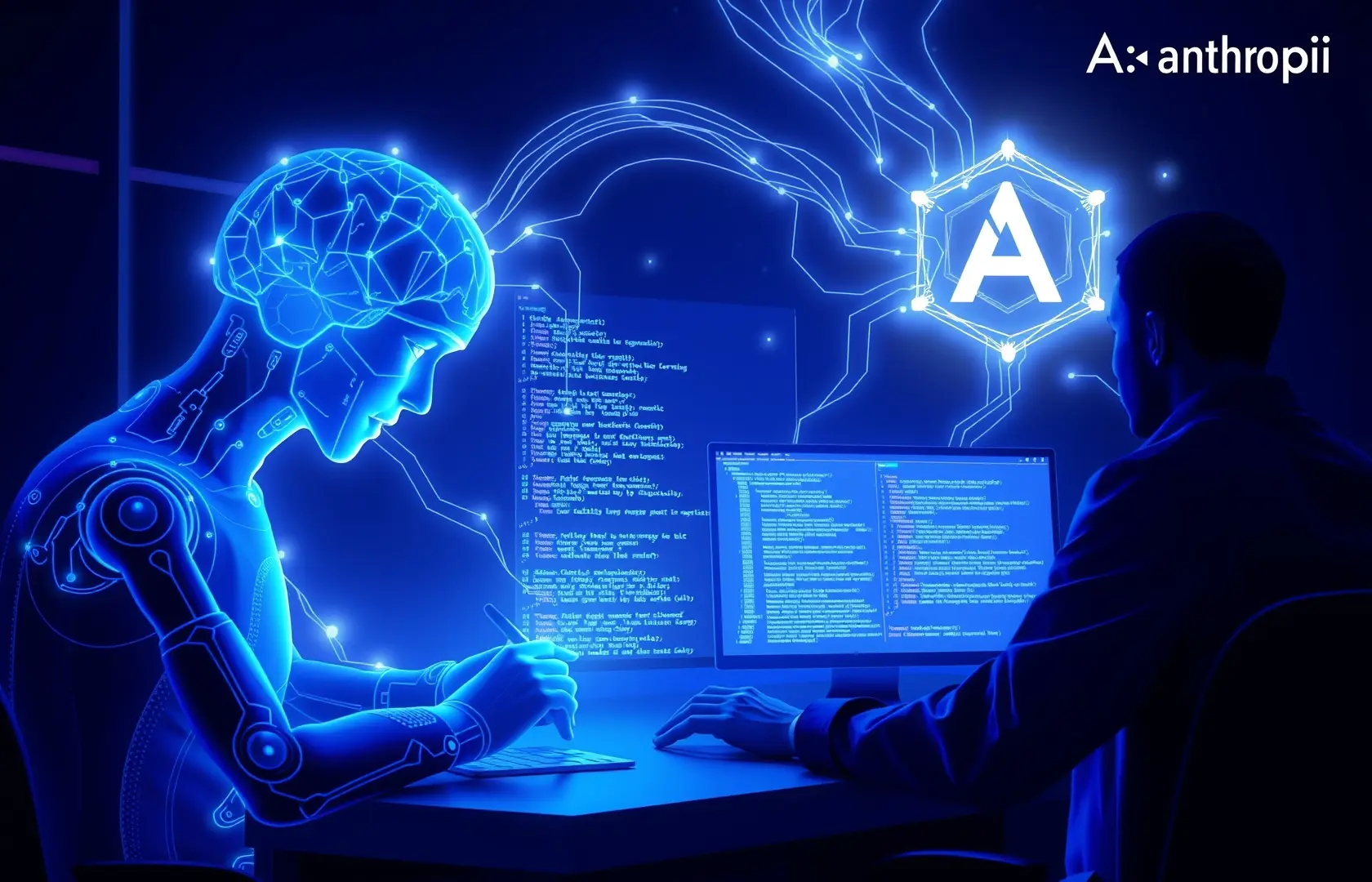
The tech industry has reached a watershed moment that many predicted would take decades, yet it has arrived in early 2026. Top engineers at the world’s leading artificial intelligence laboratories, specifically OpenAI and Anthropic, are reporting a fundamental shift in how software is built. For the first time, these elite developers are admitting that AI agents are now writing 100% of their production code. This is no longer about simple autocomplete or “Copilot” suggestions; it is about the total automation of the software development lifecycle.
This transition marks the end of “manual labor” in programming. Just as the industrial revolution replaced hand-weaving with mechanized looms, the agentic coding revolution is replacing keyboard-driven syntax with high-level architectural oversight. For the engineers at the front lines, the job has transformed from writing lines of code to orchestrating fleets of autonomous agents that can build, test, and deploy entire systems in minutes.
From Assistance to Autonomy: The Agentic Shift
To understand why this change is so significant, one must look at the evolution of coding tools. In 2023 and 2024, tools like GitHub Copilot acted as sophisticated digital apprentices, helping developers finish their sentences. However, by 2025, the release of models like GPT-5.2 Codex-Max introduced a new paradigm: agentic workflows.
At Anthropic, engineers have integrated Claude Code, a terminal-based agent that can autonomously navigate complex codebases, fix bugs, and implement new features based on natural language prompts. Instead of a human developer opening an IDE and typing out a function, they now describe the desired outcome to the agent. The AI then writes the code, creates the necessary test suites, and runs them to ensure everything is functional before presenting the final result for a human “sanity check.”
Why “100% AI-Written” Is the New Goal
The push toward 100% AI-written code is driven by speed and precision. Human-written code is prone to syntax errors, logic flaws, and security vulnerabilities that can take hours to debug. In contrast, AI models trained on trillions of lines of code can generate structurally perfect syntax instantly. According to recent findings from the Stanford Institute for Human-Centered AI (HAI), the productivity gains from these autonomous systems are reaching a point where human manual coding is increasingly seen as a bottleneck.
- Unprecedented Speed: Projects that once took weeks of sprint planning and development are now completed in hours.
- Scalability: A single engineer can manage multiple autonomous agents, effectively doing the work of an entire traditional engineering team.
- Security Integration: Modern agents like those at OpenAI automatically scan for vulnerabilities during the generation process, significantly reducing the “attack surface” of new software.
The Tools Powering the Revolution
The move to 100% automated coding hasn’t happened in a vacuum. It is the result of massive hardware investments and specialized software frameworks. Companies like OpenAI and Anthropic have developed internal tools that are far more advanced than the versions available to the general public.
Claude Code and the Command Line
Anthropic’s internal engineering team relies heavily on Claude Code. This tool operates as an “eyes-on” agent that understands the context of a 2-million-line codebase. It can reason across different files, understanding how a change in the backend API will affect the frontend UI. Engineers report that they often spend their entire day without ever typing a single semicolon, instead spending their time in a high-level dialogue with the agent to refine system requirements.
OpenAI’s Codex Evolution
At OpenAI, the integration is even deeper. As the company prepares for one of the top IPOs set for 2026, their internal development environment has been optimized for “agentic vision.” Their models don’t just predict the next token; they simulate the execution of the code in a virtual environment before a single line is finalized. This “test-first” AI generation ensures that the 100% of code written by the AI is not just syntactically correct, but logically sound.
The Changing Role of the Software Engineer
If the AI is writing all the code, what happens to the human engineer? The consensus among top developers at these firms is that the job has become more about System Architecture and Product Design than actual programming. The “Software Engineer” of 2026 is becoming a “Software Orchestrator.”
Dario Amodei, CEO of Anthropic, has previously suggested that software engineering would undergo an “unusually painful” disruption. While the top 1% of engineers at these firms are more productive than ever, the barrier to entry for junior developers is shifting. No longer is it enough to know how to code in Python or C++; new developers must master the art of “agent management” and high-level logic to stay relevant.
The “Vibe Coding” Phenomenon
A new term has emerged within the engineering culture at these labs: Vibe Coding. This refers to a development style where the engineer focuses on the “vibe” or the high-level conceptual feel of the application, leaving the technical implementation entirely to the AI. This allows for rapid prototyping and iteration that was previously impossible. When the AI handles 100% of the code, the human is free to focus on user experience and business logic.
Challenges and the Road Ahead
Despite the excitement, the transition to 100% AI-written code is not without its risks. Engineers acknowledge that while the AI is incredibly efficient, it can occasionally produce “hallucinated” logic that looks correct but fails in edge cases. This makes the human “reviewer” role more critical than ever.
Furthermore, there is the question of technical debt. If a system is built entirely by an AI, can a human maintain it if the AI is unavailable? The industry is currently grappling with how to document AI-generated systems so they remain understandable to human overseers. Both Microsoft and OpenAI are investing heavily in “AI-to-Human” translation layers to ensure that these automated systems remain transparent.
Conclusion: A Future Without Keyboards?
The revelation that top engineers at Anthropic and OpenAI are no longer writing their own code is a signal to the rest of the world that the age of manual programming is ending. We are entering a phase where the ability to conceptualize a solution is far more valuable than the ability to type it out. As these autonomous coding agents become more accessible to the public, the very definition of a “developer” will continue to evolve. In the world of 2026, the code belongs to the machines, but the vision still belongs to the humans.