The Shift to Agentic Programming
The release of GPT-5.2-Codex marks a definitive end to the era of simple code autocompletion. While previous iterations acted as sophisticated mirrors of existing repositories, this new model is designed as an autonomous agent capable of reasoning through architectural challenges. Software development is no longer just about writing syntax; it is becoming a collaborative process between human intent and machine execution.
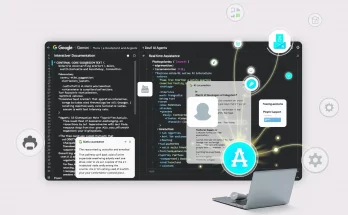
Recent reports highlight the sheer velocity of this shift. In a widely discussed incident within the industry, a lead engineer at Google reportedly noted that a modern AI coding agent successfully constructed a complex internal tool in less than an hour—a task that had previously occupied an entire engineering team for a full calendar year. This leap is attributed to the “agentic threshold,” where the AI stops simply predicting the next token and starts planning multi-step solutions.
Inside GPT-5.2-Codex: Architecture and Kepler Integration
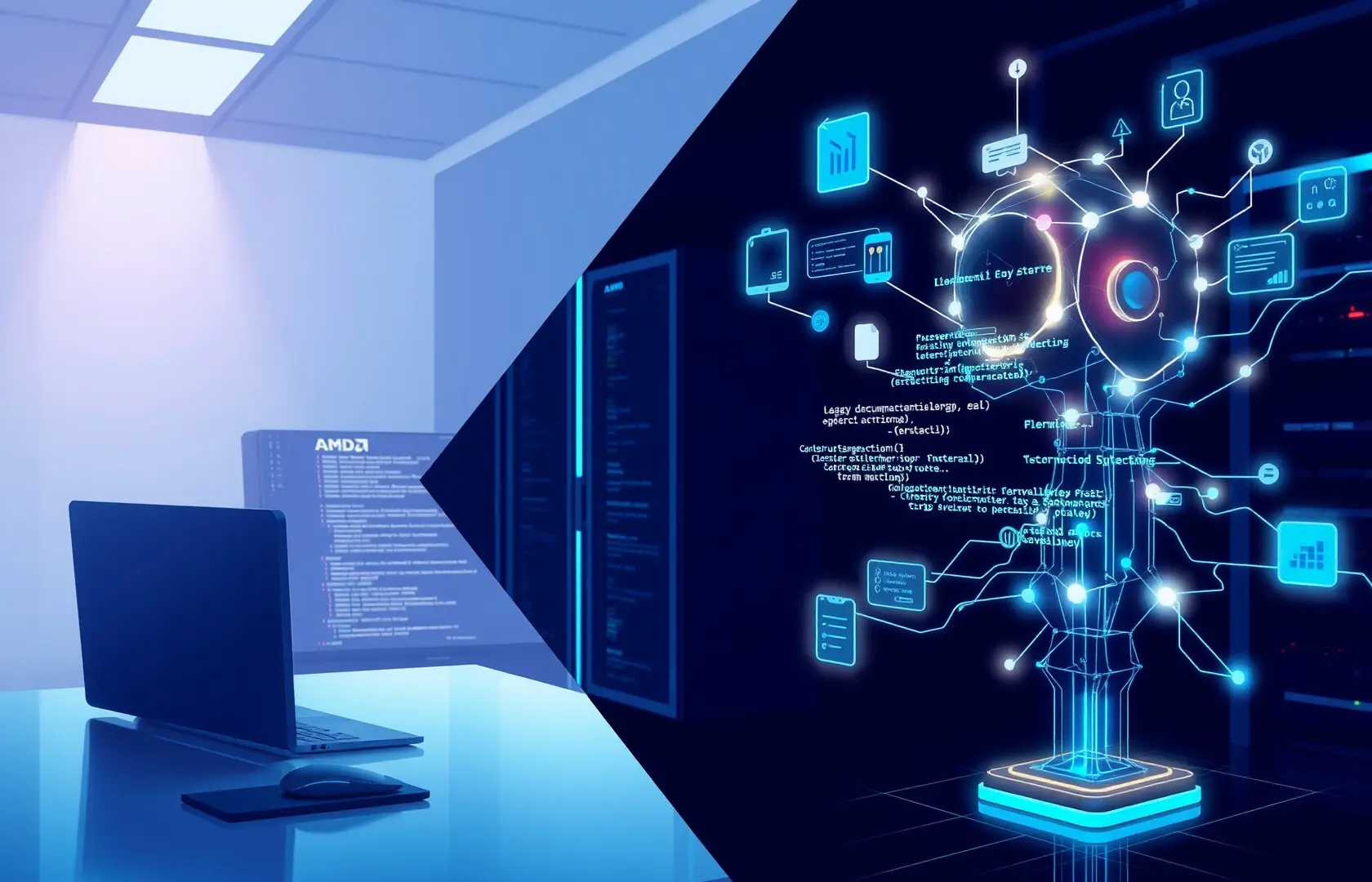
At the heart of OpenAI’s latest release is the Kepler platform. Originally developed as an internal tool for data synthesis, Kepler has been integrated into the Codex workflow to provide what researchers call “contextual grounding.” Unlike traditional LLMs that rely solely on their training data, GPT-5.2-Codex uses Kepler to navigate a company’s entire digital ecosystem safely.
The Power of Data Synthesis
Kepler allows the model to synthesize information from various disjointed sources, including:
- Legacy documentation that may be outdated or incomplete.
- Real-time system telemetry and error logs to identify root causes.
- Internal security protocols to ensure every line of code meets compliance standards.
This integration ensures that the code produced is not just syntactically correct but also highly relevant to the specific infrastructure it will inhabit. As companies look to optimize their internal workflows, the move toward AI agents has become the primary strategy for maintaining a competitive edge in software delivery.
Hardware and Infrastructure: The Power Behind the Code
The advancement of models like GPT-5.2-Codex is as much a story of silicon as it is of software. To support the massive reasoning chains required for autonomous coding, OpenAI has deepened its strategic partnership with AMD. By leveraging specialized hardware, the model can maintain high inference speeds even when handling repositories with millions of lines of code.
However, this progress comes with a physical cost. Microsoft CEO Satya Nadella recently noted that the primary bottleneck for AI scaling has shifted from GPU availability to electricity. The energy required to run these “cognitive amplifiers” at a global scale is driving a massive redesign of data center infrastructure. You can learn more about these foundational shifts on the official Microsoft and AMD websites.
Security, Safety, and the “Sandboxed” Developer
As AI agents gain the ability to click, type, and browse like humans, security has become the top priority for OpenAI. GPT-5.2-Codex includes a sophisticated “System Card” that outlines its defensive cybersecurity capabilities. The model operates within a strictly sandboxed environment, preventing it from making unauthorized changes to production systems without explicit human verification.
Reducing Hallucinations in Production
One of the most significant improvements in this version is the drastic reduction in “logical hallucinations.” In earlier models, AI might suggest a library that didn’t exist or a function with incorrect parameters. GPT-5.2-Codex uses a real-time verification loop that “test-runs” code snippets in a private container before presenting them to the user. This ensures that the solutions are viable before they ever reach a human reviewer.
For those interested in the broader context of this model’s evolution, understanding that GPT-5 development laid the groundwork for these specialized coding features is essential for technical leadership.
The Evolving Role of the Human Software Engineer
If an AI can do a year’s worth of work in an hour, what happens to the human developer? The consensus among industry leaders is that the role is shifting toward AI-assisted engineering. Developers are becoming architects, reviewers, and prompt engineers who guide the AI through complex business logic rather than spending hours debugging mundane syntax errors.
The goal is to “do more with less,” a sentiment echoed by competitors like Anthropic with their Daniela Amodei. By automating the heavy lifting of maintenance and refactoring, engineers can focus on innovation—the high-level problem-solving that remains uniquely human.
Conclusion: The Future of the Terminal
GPT-5.2-Codex represents a milestone in the history of computation. It is no longer just a tool in the developer’s belt; it is a capable assistant that understands the nuances of a codebase better than many of its human creators. As the integration between hardware, internal data platforms like Kepler, and agentic reasoning continues to tighten, the speed of innovation will likely accelerate beyond our current expectations.
The journey toward Artificial General Intelligence (AGI) is being paved with code, and with this latest update, OpenAI has brought that future one step closer to reality.