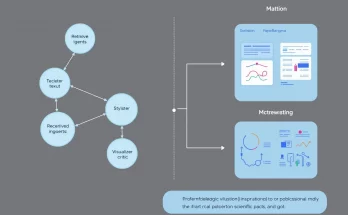
The landscape of scientific research is undergoing a fundamental transformation as artificial intelligence moves beyond simple chat interfaces and into the very core of technical writing. OpenAI has officially launched Prism, a free, cloud-based, LaTeX-native workspace designed to streamline the entire lifecycle of scientific documentation. By integrating the advanced reasoning capabilities of the new GPT-5.2 model directly into an authoring environment, Prism aims to eliminate the friction that researchers face when transitioning between drafting, bibliography management, and complex mathematical typesetting.
A New Era for Technical Document Creation
For decades, LaTeX has remained the undisputed standard for mathematical and scientific publishing. Its ability to handle intricate formulas, cross-referencing, and document structure is unparalleled, yet it has historically come with a steep learning curve and a fragmented ecosystem of local editors and cloud compilers. Prism changes this dynamic by offering a unified, AI-native platform that requires no local setup. Unlike previous iterations where AI was a separate tool used for brainstorming, Prism treats the AI as a native participant in the document lifecycle.
Built upon OpenAI’s acquisition of the Crixet LaTeX platform, Prism provides a robust environment where researchers can collaborate in real time. It supports unlimited projects and collaborators, making it a direct challenger to established tools like Overleaf. However, the true differentiator is the “AI-in-the-loop” philosophy, where the model understands the semantic structure of a paper, from the abstract to the specific TikZ code used to generate diagrams.
The Intelligence Behind the Editor: GPT-5.2
The heart of Prism is GPT-5.2, a model specifically optimized for STEM, mathematical reasoning, and long-form technical writing. While previous models often struggled with the precise syntax of LaTeX or made subtle errors in complex derivations, GPT-5.2 demonstrates a deep understanding of mathematical logic. This allows the AI to act as a sophisticated proofreader and reasoning partner.
In many ways, this release is the logical extension of OpenAI’s broader strategy to automate technical workflows. This same underlying architecture is what allows systems to handle highly complex logic, much like how AI now writes 100% of code in leading engineering environments. In Prism, this reasoning depth translates to an AI that can spot inconsistencies in a series of equations or suggest citations based on the context of a paragraph.
Advanced Reasoning and Citation Management
One of the most persistent hurdles in scientific writing is managing a vast library of references. Prism integrates directly with citation tools like Zotero and supports native literature searches within the workspace. Researchers can prompt the integrated GPT-5.2 to find relevant papers on arXiv.org and automatically generate the BibTeX entries required for the bibliography. This reduces the constant context switching that traditionally slows down the writing process.
Key Features of the Prism Workspace
Prism is packed with features designed specifically for the modern scientist. By moving beyond a simple text box and into a multi-file workspace, OpenAI has created a tool that feels like a full-featured IDE for research papers. Key highlights include:
- Real-Time Rendering: A high-speed cloud compiler that provides instant PDF previews, ensuring that what you see in the code is what appears on the page.
- TikZ Diagram Generation: One of the most impressive features is the ability to convert whiteboard drawings or descriptive text directly into TikZ code, the standard for high-quality vector graphics in LaTeX.
- Voice-Enabled In-Place Edits: Researchers can highlight a section of text and provide voice commands to rephrase, expand, or format the content according to specific journal guidelines.
- Context-Aware Bibliography: The system keeps track of all cited works and ensures that the citations are consistent throughout the document, even when sections are moved or rewritten.
The Move Toward Agentic Research
The integration of GPT-5.2 into Prism also hints at the future of agentic research. The workspace is designed to be more than a passive editor; it is a precursor to a system that can actively assist in data synthesis and hypothesis testing. This aligns with OpenAI’s developments in autonomous systems, such as the GPT-5.2 Codex-Max, which emphasizes the ability of AI to plan and execute multi-step tasks within a professional environment.
Bridging the Gap in Scientific Collaboration
Collaboration has always been a pain point in LaTeX, often leading to version-control chaos when multiple authors attempt to edit the same file. Prism solves this through a cloud-native architecture that supports real-time, Google Docs-style collaboration. Authors can leave comments that the AI can then address—for example, a lead author might leave a note saying, “Expand this section to include recent findings in quantum entanglement,” and the AI can generate a draft based on the latest available research.
Furthermore, Prism is available for free to anyone with a personal openai.com account. This democratization of high-end research tools is a significant step toward making advanced scientific publishing accessible to students and researchers in underfunded institutions. By lowering the technical barriers to using LaTeX, OpenAI is essentially opening the doors for more diverse voices to contribute to the global scientific discourse.
Privacy and Academic Integrity
As with any AI-driven tool in academia, questions of privacy and integrity are paramount. OpenAI has positioned Prism as a tool to aid creation rather than replace it. The platform is designed to provide “human-in-the-loop” assistance, where the author maintains full control over the final output. For institutional users, OpenAI is expected to roll out enterprise-grade security features to ensure that sensitive pre-publication data remains protected.
The launch of Prism is a clear signal that the future of science is not just AI-assisted, but AI-native. By providing a free, powerful, and integrated workspace, OpenAI is not only simplifying the lives of researchers but also accelerating the pace at which scientific knowledge can be documented and shared with the world. Whether you are a PhD student fighting with bibliography errors or a veteran professor coordinating a multi-university study, Prism offers a glimpse into a more efficient, collaborative, and intelligent way to write science.