The landscape of artificial intelligence is shifting from models that simply answer questions to systems that can independently pursue them. OpenAI has signaled a massive strategic pivot, committing significant resources toward building a fully automated researcher. This initiative, led by Chief Scientist Jakub Pachocki, marks a transition from “generative” AI—which predicts the next word—to “agentic” AI, which can reason, plan, and execute complex scientific workflows.
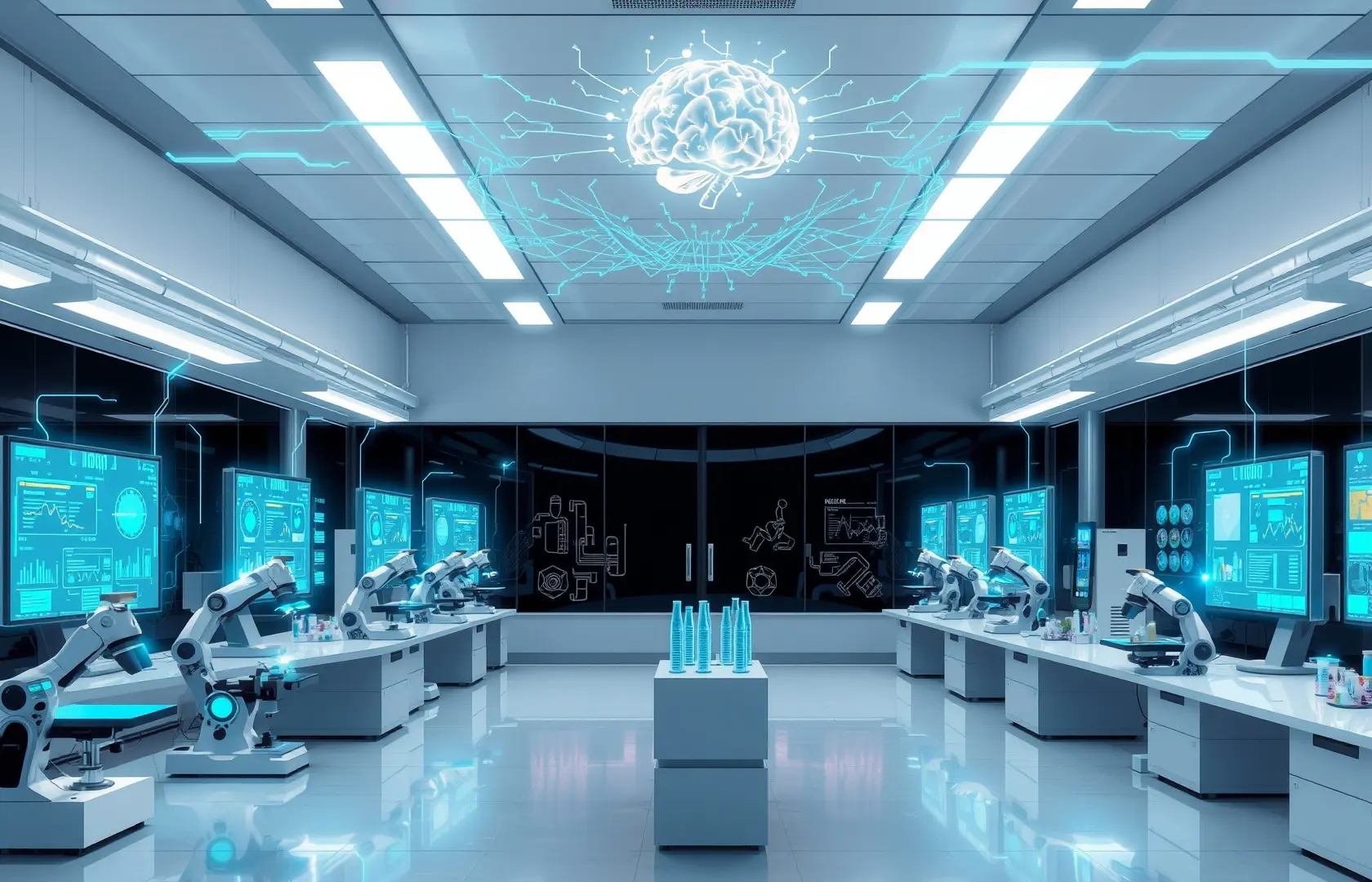
The goal is nothing short of redefining the laboratory. By automating the research process, OpenAI aims to overcome the current bottleneck of human intellectual labor, potentially leading to a recursive feedback loop where AI models assist in creating their own successors. This ambitious roadmap points toward a full multi-agent research system debut by 2028, with an “AI research intern” serving as the immediate precursor.
The Vision: Scaling Intellectual Labor
For decades, the limiting factor in scientific discovery has been the speed at which humans can hypothesize, experiment, and analyze. OpenAI’s new focus aims to solve this by treating research as a long-horizon task that can be broken down and managed by autonomous systems. Jakub Pachocki has described this as a “grand challenge” for the firm. Unlike a standard chatbot that provides instant gratification, an automated researcher is designed to work for days or even weeks on a single problem.
This vision relies on the concept of asymmetric leverage. A single human scientist could oversee a fleet of AI researchers, each handling a different subset of a massive problem—such as discovering a new material or optimizing a complex algorithm. This shift is explored in depth in our look at how autonomous agents change research forever, where the focus is on AI becoming a peer in the creative process rather than just a tool.
Foundational Blocks: The Role of OpenAI o1
The cornerstone of this automated future is the o1 series of models, also known by the internal codename “Strawberry.” These models are specifically designed to “think” before they respond, using a process called chain-of-thought reasoning. While traditional Large Language Models (LLMs) are optimized for speed, o1 is optimized for accuracy and logical consistency in fields like mathematics, coding, and the hard sciences.
By spending more time on internal computation (often referred to as “inference-time compute”), o1 can navigate complex multi-step problems that would typically cause a standard model to hallucinate. This is the first step toward a true research agent. You can read more about this evolution in our article on the rise of extreme AI reasoning. The ability to verify its own logic is what allows the model to act as a reliable “intern” in a research setting.
From Chatbots to Multi-Agent Systems
OpenAI’s roadmap suggests that a single model, no matter how powerful, isn’t enough to automate discovery. The future lies in multi-agent systems. In this architecture, different agents play specialized roles:
- The Planner: Decomposes a large research goal into manageable subtasks.
- The Worker: Executes specific tasks, such as writing code, querying databases, or running simulations.
- The Judge: Reviews the results, checks for errors, and provides feedback to the other agents to refine their approach.
This iterative loop mimics the scientific method. If an experiment fails, the system doesn’t just stop; it analyzes the failure, adjusts the hypothesis, and tries again. This “Operator” style of agency is already being previewed in official releases like OpenAI Operator, which can use a browser to perform tasks autonomously.
The Competitive Landscape: A Race for AGI
OpenAI is not alone in this pursuit. The race to automate science has become the primary front in the battle for Artificial General Intelligence (AGI). Google’s DeepMind has already made significant strides with models like AlphaProof and AlphaGeometry, which have solved International Mathematical Olympiad problems at a silver-medal level. Furthermore, Google recently introduced its “AI co-scientist,” a multi-agent system built on Gemini to accelerate biomedical breakthroughs.
Anthropic is also moving rapidly in this direction, with reports suggesting they plan to launch a specialized research assistant by 2027. The competition is fierce because whoever builds the first truly automated researcher gains a compounding advantage: they can use the AI to speed up the development of the next AI, leading to an exponential growth curve in capability.
Risks and Ethical Considerations
The prospect of fully automated researchers brings significant challenges. There are deep concerns about the safety and alignment of autonomous systems that can perform scientific experiments. If an AI is tasked with optimizing a biological compound, for example, it must have rigorous guardrails to prevent it from inadvertently (or intentionally) creating something hazardous.
Other risks include:
- Deskilling: As AI takes over the “rote” tasks of research, junior scientists may lose the opportunity to learn fundamental skills through practice.
- Black Box Discovery: If an AI discovers a new law of physics but cannot explain the logic in a way humans understand, it creates an “illusion of understanding.”
- Unverifiable Knowledge: Science depends on peer review, but if the peer is another AI, the system could become a closed loop that drifts away from human-verifiable truth.
Organizations like Nature have already begun discussing the need for new frameworks to manage AI-generated research. Ensuring that these “automated scientists” remain transparent and aligned with human values is just as important as their raw intellectual output.
Conclusion: The Lab of 2028
OpenAI’s “all-in” bet on automated researchers suggests that the era of the human-only lab is coming to a close. By 2028, we may see research environments where AI agents handle the bulk of experimental design, data analysis, and literature reviews, leaving human scientists to act as high-level directors and ethical navigators. The success of this pivot will depend on whether reasoning models like o1-preview can truly graduate from solving math problems to discovering new truths about the universe. One thing is certain: the speed of innovation is about to change forever.