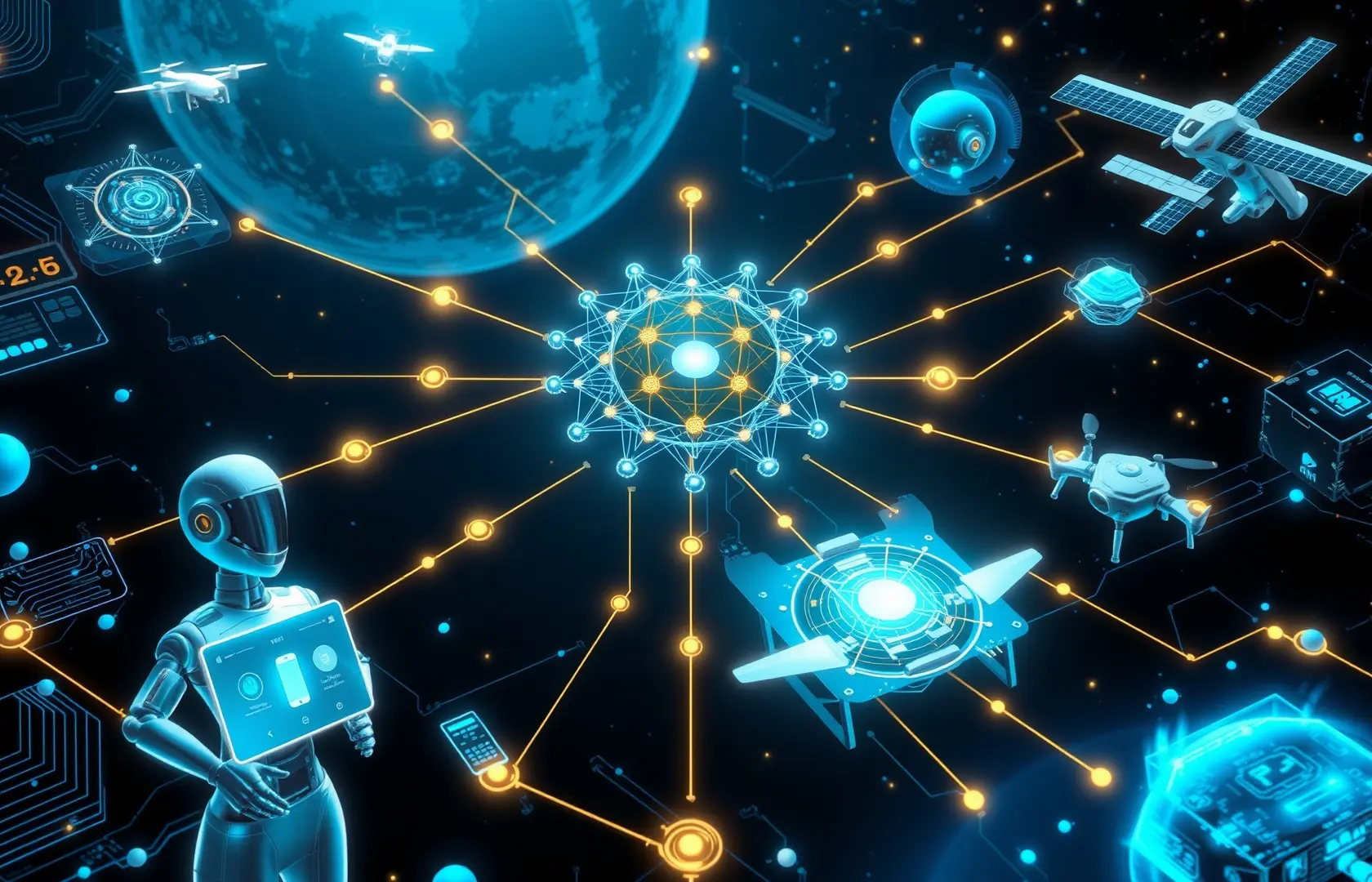
The Emergence of the Agentic AI Era
The global artificial intelligence landscape is witnessing a fundamental shift in focus. While the initial wave of generative AI was characterized by conversational chatbots and digital assistants, a new paradigm is taking hold: the Agent Era. In this phase, AI models are no longer content with merely providing information; they are designed to perform autonomous actions, navigate complex workflows, and interface with the physical world. Leading Chinese AI laboratories are at the forefront of this transition, unveiling a coordinated wave of “agentic” and “embodied” models that aim to redefine the boundaries of what machines can achieve.
This movement is driven by the realization that the true value of AI lies in its ability to execute tasks. Whether it is managing a professional schedule, organizing data across multiple applications, or controlling robotic hardware, the goal is to create systems that act with intent. As these technologies mature, they are moving from the screen to the real world, a frontier often referred to as Physical AI. By integrating large-scale models with hardware, these labs are laying the groundwork for a future where AI is deeply embedded in our physical environment.
Strategic Launches and the Push for Productivity
The timing of these technological breakthroughs is often strategic, coinciding with significant cultural milestones like the Lunar New Year. During this period, major players such as ByteDance and Baidu have rolled out significant updates designed to capture both public attention and market share. ByteDance recently introduced Doubao 2.0, an evolution of its widely used AI application. This model is explicitly positioned for the agentic era, focusing on its ability to handle long-running, multi-step tasks that require a high degree of autonomy. By moving beyond the prompt-and-response loop, Doubao 2.0 represents a step toward AI that can independently manage productivity pipelines.
Similarly, Baidu has integrated its OpenClaw AI agent directly into its flagship search application, reaching a user base of over 700 million. Unlike traditional search engines, this integration allows users to command the AI to perform specific actions—such as scheduling meetings or organizing complex file directories—without leaving the app. This shift towards “personal intelligence” suggests a future where search is not just about finding links, but about triggering actions. To learn more about how these developments fit into the broader geopolitical landscape, you can explore China’s AI rise and its challenge to global tech leaders.
Embodied AI: Bridging the Gap Between Digital and Physical
Perhaps the most ambitious aspect of this new wave is the rise of Embodied AI. This refers to artificial intelligence that is integrated into a physical body, such as a robot, a drone, or even a satellite. While digital agents navigate software, embodied models must navigate the three-dimensional world, understanding physics, spatial constraints, and real-time sensory input. Chinese labs are increasingly focusing on these “Physical AI” frontiers, seeking to seize the early advantage in robotics and autonomous systems.
The integration of advanced AI into hardware is not limited to factory floors. We are seeing the emergence of embodied models in diverse fields:
- Robotics: Mechanical systems capable of performing complex cleaning, maintenance, and manufacturing tasks with minimal human intervention.
- Space Computing: AI-driven satellite constellations that can process data autonomously in orbit, reducing the need for constant communication with ground stations.
- Autonomous Drones: Systems that use voice control and agentic vision to navigate and execute missions in dynamic environments.
This focus on the physical frontier is a direct response to the limitations of purely digital AI. By giving AI a physical presence, these labs are enabling technologies that can actively participate in the labor market and infrastructure management.
Technological Sovereignty and the Role of Domestic Hardware
A critical component of this surge is the push for technological self-sufficiency. As international trade restrictions on high-end semiconductors continue to evolve, Chinese AI firms are increasingly training their agentic models on domestic hardware. Companies like Zhipu AI have highlighted their use of locally manufactured chips, such as those from Huawei and Moore Threads, for both training and inference. This shift is not just about logistics; it is a strategic move to ensure that the “Physical AI” frontier remains accessible regardless of global supply chain shifts.
Furthermore, the development techniques used to create these models are becoming more sophisticated. There has been significant discussion surrounding “distillation”—a process where smaller, more efficient models are trained using the outputs of larger, established models. While this has sparked debates about the origins of certain architectures, it has also allowed for the rapid deployment of highly capable agents that can run on a variety of hardware configurations. The evolution of these scaling techniques is well-documented in recent analyses of breakthroughs in AI scaling, which show how labs are optimizing performance for real-world deployment.
The Global Impact of the Agentic Frontier
The rapid advancement of agentic and embodied models in China is placing significant pressure on global technology giants. Companies like Google and NVIDIA are closely monitoring these developments, as the race for AI dominance shifts from who has the best chatbot to who can build the most effective autonomous workforce. NVIDIA, in particular, stands at a pivotal junction, as its hardware continues to be the gold standard for AI development, even as competitors seek to build alternative ecosystems.
The transition to the agent era also has profound implications for the future of work. As AI models become capable of automating white-collar tasks—such as data analysis, project management, and software development—the demand for human-AI collaboration will increase. Experts suggest that the ability to manage and interact with these autonomous agents will become a core competency for future professionals. The goal is not necessarily to replace human workers, but to augment their capabilities, allowing them to focus on higher-level strategy while the “agents” handle the execution.
Key Challenges in the Path Forward
Despite the rapid progress, several challenges remain. Ensuring the safety and reliability of autonomous agents is paramount, especially when they are empowered to make decisions in the physical world. Issues such as “hallucinations”—where an AI generates incorrect or nonsensical information—become much more dangerous when they result in physical actions. Furthermore, the ethical implications of “Black-Box” systems are driving a demand for greater transparency. Users want to understand how an AI arrived at a decision, especially in high-stakes environments like healthcare or industrial manufacturing.
Privacy is another major concern. As personal AI agents gain access to more of our digital lives to perform their tasks, the need for robust data protection becomes critical. Organizations like OpenAI and other global leaders are actively working on frameworks to ensure that the move toward autonomy does not come at the expense of user security.
Conclusion: A New Chapter in Human-AI Interaction
The coordinated wave of agentic and embodied models from Chinese AI labs marks the beginning of a new chapter in technology. We are moving toward a world where AI is not just a tool we talk to, but a partner that acts alongside us. By seizing the physical AI frontier, these labs are challenging our traditional understanding of automation and paving the way for a more integrated, efficient, and autonomous future. As these models continue to evolve, the distinction between the digital and physical worlds will continue to blur, ushering in an era of unprecedented productivity and innovation.