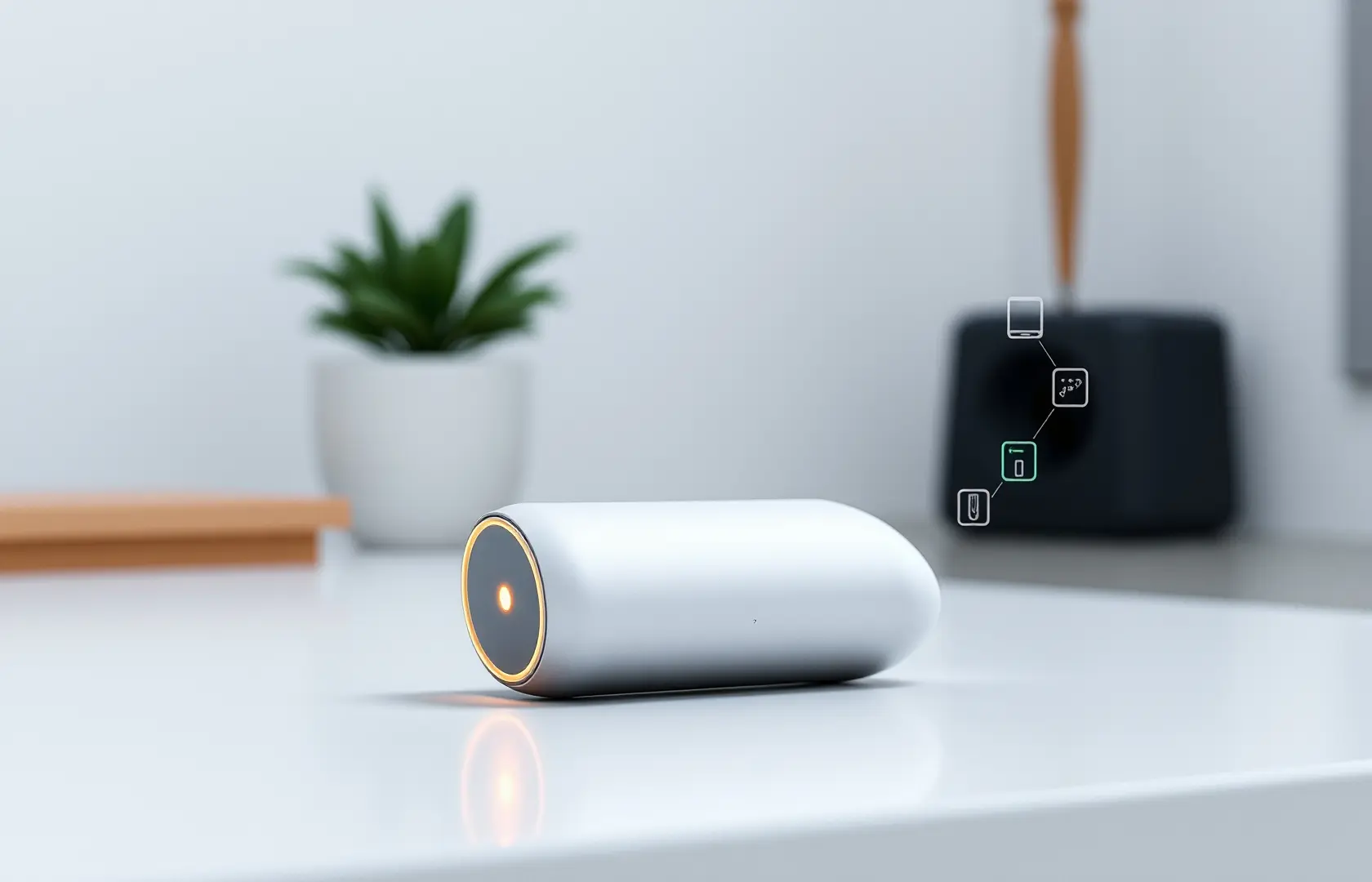
The High-Stakes Partnership Between Altman and Ive
The tech industry is witnessing a seismic shift as OpenAI moves beyond the digital realm and into the physical world. For over a year, whispers of a collaboration between Sam Altman and legendary former Apple designer Jony Ive have circulated. Those rumors solidified with the recent multi-billion dollar acquisition of io Products, the hardware startup founded by Ive to explore AI-native consumer electronics. This partnership represents a rare alignment of interests: OpenAI’s cutting-edge reasoning models paired with the aesthetic and functional mastery that once defined the iPhone era.
The goal of this project is not merely to build another gadget but to create what insiders call an “iPhone antidote.” While the smartphone dominated the last two decades by centralizing our lives behind a glowing screen, the vision for OpenAI’s secret device is to move the technology into the background. By leveraging sophisticated agentic AI, the hardware is expected to interact with the world on behalf of the user, reducing the need for constant manual input and screen-based navigation.
A Shift from Software to Physical Agents
Transitioning from a software-first company to a hardware manufacturer is a massive undertaking. However, OpenAI’s strategy for US-based AI hardware supply indicates a long-term commitment to controlling the entire stack. By owning the hardware, OpenAI can optimize its models to run more efficiently on local silicon, ensuring lower latency and better privacy for sensitive tasks. This move suggests that the future of AI isn’t just a chatbot in a browser—it’s a physical presence that understands and reacts to its environment.
The Design Philosophy: Designing for Humanity
Jony Ive’s involvement brings a specific design philosophy that prioritizes elegance and human presence. In rare public discussions, backers of the project, including Laurene Powell Jobs of the Emerson Collective, have hinted that current technology has left us with an “uneasy” relationship with our devices. We are tethered to notifications and trapped in endless scrolling loops.
The “io” project seeks to break this cycle. The design is rumored to be minimalist, possibly even screenless. Instead of a display-driven interface, the device will likely rely on multimodal interaction:
- Voice Recognition: High-fidelity audio capture that can discern intent and context in noisy environments.
- Computer Vision: Cameras or sensors that allow the AI to “see” and understand the user’s physical surroundings.
- Tactile Feedback: Using high-end materials and subtle physical signals to communicate without the need for visual alerts.
Designing for Presence, Not Distraction
The primary design challenge is creating a device that provides immediate value without demanding constant attention. If successful, the device will act as a personal concierge that manages schedules, summarizes real-world conversations, and interacts with other smart systems autonomously. This “ambient computing” model is the ultimate goal of the 2026 debut of AI hardware, marking the point where technology finally adapts to the human, rather than the other way around.
OpenAI’s $6.5 Billion Bet on the Future of Hardware
The acquisition of io Products for a reported $6.5 billion underscores the urgency OpenAI feels to establish its own ecosystem. Currently, OpenAI relies heavily on platforms owned by Apple and Google to reach its users. This creates a strategic bottleneck where competitors can control the user experience or take a significant cut of subscription revenue.
By launching its own device, OpenAI effectively creates its own “operating system” for AI agents. This moves the company from being an app provider to a platform owner. It allows for deeper integration of features like GPT-5’s advanced reasoning and real-time vision capabilities, which might be throttled or restricted on traditional mobile operating systems due to battery or privacy constraints.
What We Know About the Secret Device Features
While official specifications remain under lock and key, several patterns have emerged from supply chain leaks and strategic hires. The hardware is expected to be a wearable or a highly portable companion that prioritizes battery life and continuous connectivity. Unlike the failed “AI pins” of previous years, OpenAI’s entry is expected to focus on agentic autonomy—the ability for the AI to execute complex tasks without a step-by-step prompt from the user.
The Role of Agentic AI
The secret device will likely be the primary home for OpenAI’s “Operator” agents. These are specialized models capable of navigating the web, managing emails, and interacting with third-party apps autonomously. In a hardware context, this means the device could listen to a meeting and automatically draft a summary, cross-reference it with your calendar, and schedule follow-ups—all without you ever looking at a screen. The hardware serves as the “eyes and ears” for these digital agents.
The Competitive Landscape: Apple, Meta, and Beyond
OpenAI is not the only player looking to move beyond the smartphone. Meta has seen surprising success with its smart glasses, proving that consumers are willing to embrace AI-integrated wearables if the form factor is familiar and the utility is high. Apple is also reportedly exploring its own AI-centric wearables to complement its “Apple Intelligence” ecosystem.
However, OpenAI has a distinct advantage: its models currently set the industry standard for reasoning and natural language processing. If the hardware can flawlessly bridge the gap between human speech and digital action, it could bypass the need for traditional apps entirely. This “zero-UI” or “natural-UI” approach is the most significant threat to the status quo of the mobile industry.
Conclusion: The End of the Smartphone Era?
The collaboration between Sam Altman and Jony Ive is more than a celebrity tech partnership; it is a fundamental bet on how humans will interact with information in the future. As we move away from the “app-for-everything” model toward a single, unified AI companion, the physical objects we carry must evolve. Whether this secret device takes the form of glasses, a pendant, or a new category of handheld companion, its arrival will signal the beginning of a post-smartphone era.
By investing billions into a hardware vision that prioritizes human presence and agency, OpenAI is attempting to rewrite the rules of consumer electronics. The success of this device will depend on whether it can deliver on the promise of an AI that truly serves its user, quietly and effectively, without the addictive pitfalls of the modern screen.