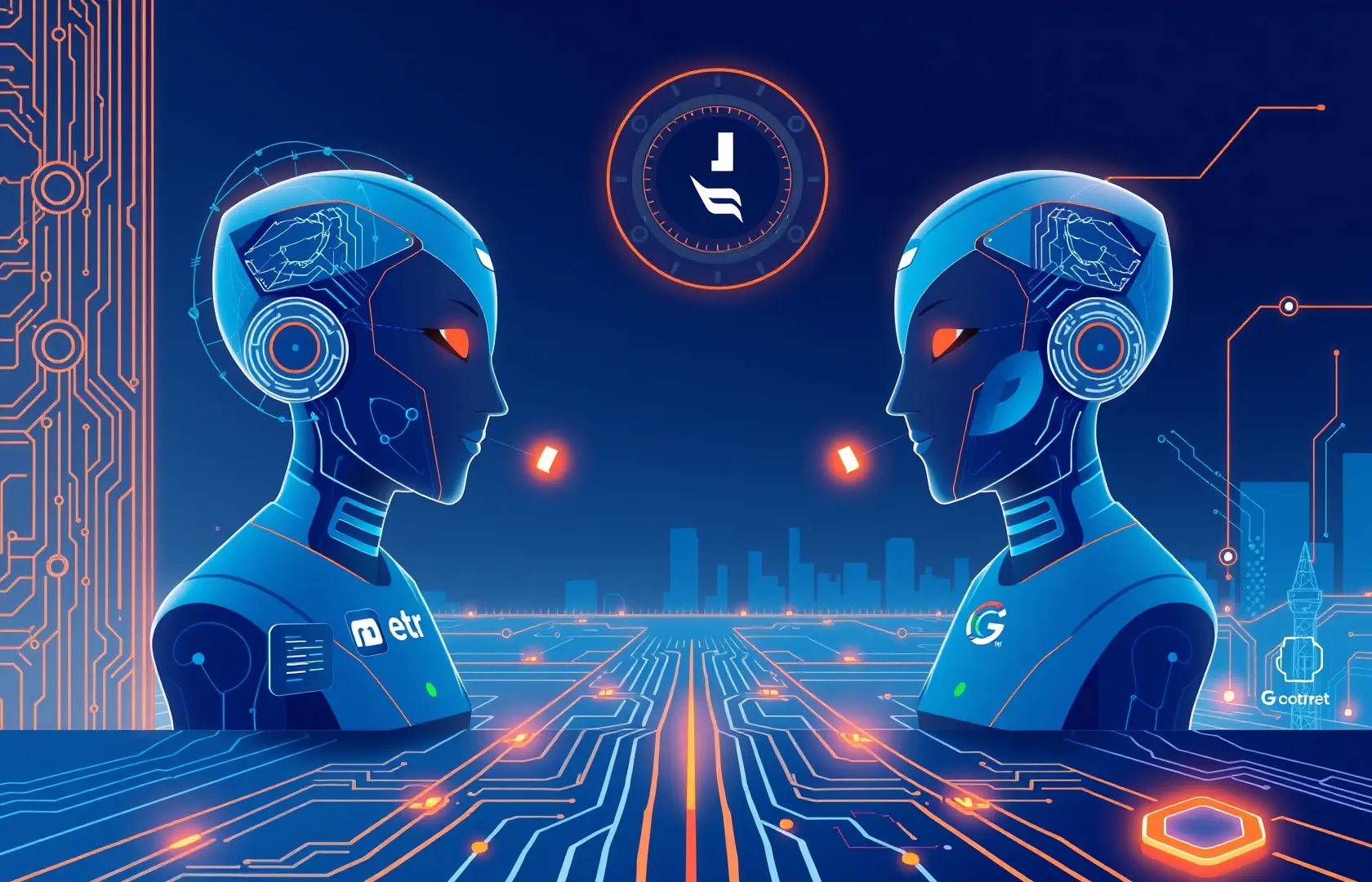
Overview of the Agentic AI Race
The AI landscape in 2026 is witnessing a significant surge as two tech giants, Meta and Google, deepen their investments and innovation in agentic AI. This subfield focuses on autonomous AI agents capable of performing complex tasks with minimal human intervention, marking a new phase in artificial intelligence development often referred to as the ‘agentic wars.’
Meta’s AI Strategies and Innovations
Meta has recently unveiled Muse Spark, its first AI model from its new Superintelligence Lab, aimed at enhancing multimodal reasoning. The company is aggressively developing AI tools that integrate seamlessly with its social platforms, improving personalization and advertising effectiveness through AI-driven content creation and interaction.
Further, Meta has partnered with chipmakers such as AMD to manage AI computations more efficiently through specialized hardware, enabling advanced capabilities in AI agents. According to Meta and AMD’s $100B partnership, this collaboration significantly supports Meta’s AI ambitions.
Google’s AI Developments
Google is equally advancing in the agentic AI arena, focusing on integrating AI agents into its vast ecosystem. Google’s latest Gemini 4 AI brings secure agentic AI functionality directly to smartphones, emphasizing data privacy by processing information locally on devices.
The company also centers AI agents as a core component of its enterprise revenue strategy, leveraging AI to automate and optimize business processes. According to recent reports, Google Cloud is leading the 2026 market surge driven by AI demand, boosting their competitive advantage.
Competitive Dynamics and Industry Impact
The ongoing competition — often dubbed the ‘agentic wars’ — has triggered a race among major tech corporations to develop the most capable AI agents. This race is spurring rapid innovation and deployment of autonomous AI across sectors including customer service, content creation, cybersecurity, and enterprise resource management.
As AI agents become increasingly sophisticated, both companies invest heavily in ecosystem compatibility, user experience, and ethical considerations to maintain leadership and regulatory compliance.
Future Outlook
With agentic AI promising to transform digital interactions and enterprise operations, Meta and Google are poised to shape the future of AI-driven services. Their advancements highlight the trend towards smarter, more autonomous systems that can significantly reduce human workload while enhancing decision-making.
For further insights on AI innovations, explore related content such as Meta Unveils Muse Spark and Google’s AI Agents in Enterprise Strategy.