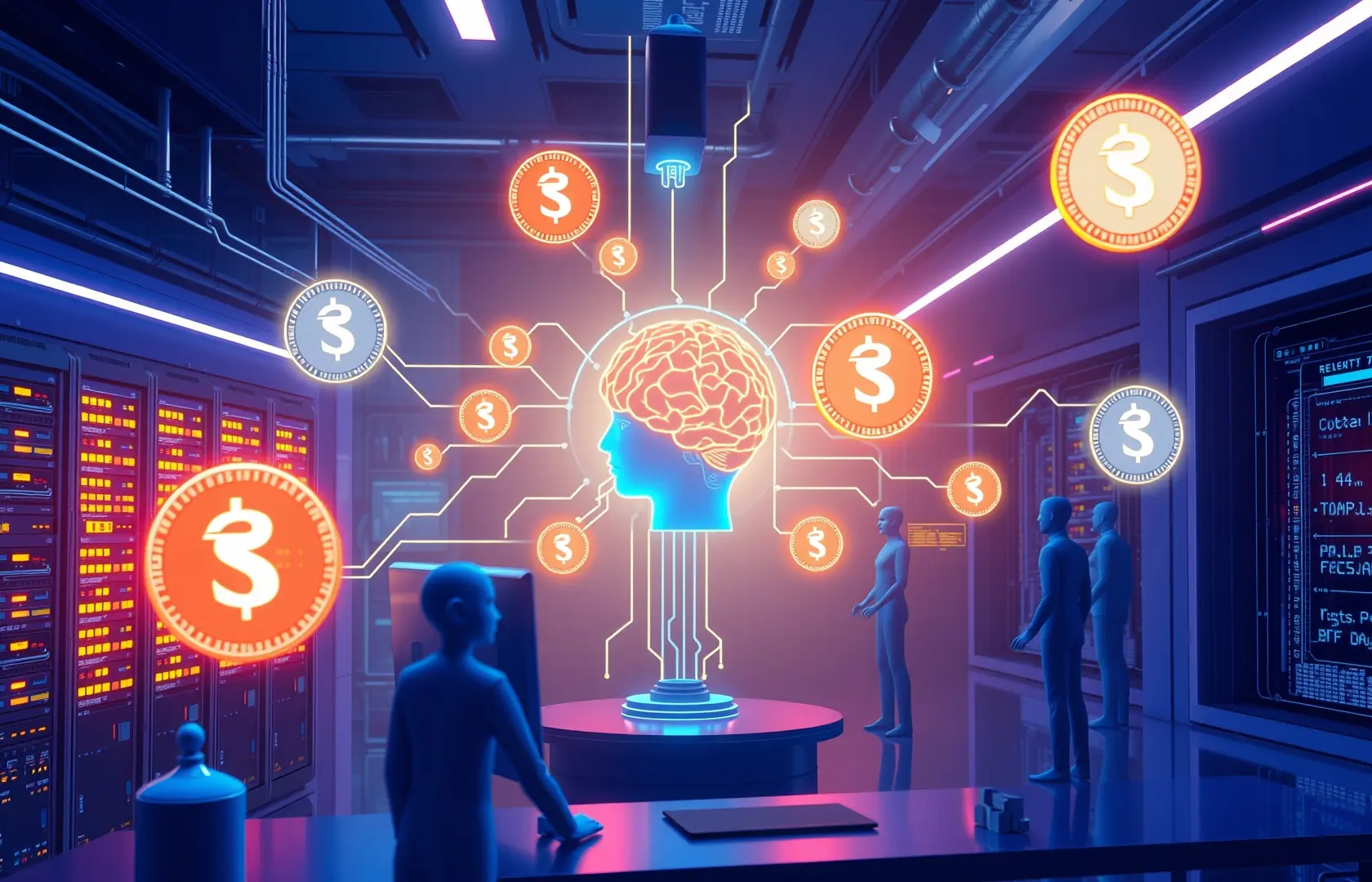
As the corporate landscape shifts deeper into 2026, the metrics of workforce productivity are undergoing a fundamental transformation. For decades, businesses measured efficiency through the lens of headcount, labor hours, and operational output. Today, a new economic reality has taken hold: tokenomics.
The Rise of Tokenomics in Enterprise
Token usage—the volume of data processed by Large Language Models (LLMs) to perform tasks—has become the primary variable for operational budgeting. As organizations increasingly deploy autonomous agents to handle complex workflows, the consumption of tokens is skyrocketing. Industry analysts note that enterprise token consumption is projected to grow by 24-fold by 2030, fundamentally changing how IT and finance departments view tech stacks. Much like headcount, token consumption is now a recurring expense that requires forecasting, governance, and strict ROI analysis.
FinOps: The New Mandate
To avoid “invoice shock,” forward-thinking enterprises are adopting FinOps for AI. This discipline involves real-time tracking of token demand, establishing clear spending thresholds for specific projects, and ensuring that AI-driven automation delivers measurable business value. Without rigorous governance, the ease of deploying agentic AI can quickly spiral into an unpredictable overhead that mimics the scaling costs of traditional labor without the predictable benefit of human expertise.
Beyond Tokenomics: 4 Trends Reshaping Work
While managing AI spend is critical, it is just one facet of the rapidly evolving workplace. Here are four additional trends defining how we work in 2026:
1. Agentic Workflows Become Standard
The transition from passive chatbots to agentic AI systems is no longer theoretical. Organizations are increasingly relying on AI agents that can chain multiple tasks together, from drafting proposals to coordinating internal schedules. This shift places a higher premium on “AI orchestration,” where human managers supervise fleets of digital agents rather than managing individual tasks manually.
2. The Rise of “Living off the AI Land”
Security is evolving alongside adoption. Cyber-adversaries are moving beyond simple phishing; they are now attempting to hijack legitimate AI platforms using valid credentials to execute complex, automated fraud or data exfiltration. This “living off the AI land” tactic necessitates a new focus on AI-native cybersecurity, where identity and access management (IAM) are integrated directly into the LLM interaction layer.
3. Data Quality as the New Competitive Edge
As model performance begins to plateau across top-tier providers, the differentiator is no longer just the model itself, but the proprietary data used for fine-tuning. Companies that have spent years curating high-quality, structured internal data are finding themselves with a massive competitive advantage. Information hygiene has moved from an IT back-office concern to a core business strategy.
4. The Human-in-the-Loop Renaissance
Despite the push for automation, there is a renewed recognition of the importance of human judgment in high-stakes roles. In fields like healthcare, finance, and legal services, the most successful organizations are moving away from full autonomy toward a hybrid decision-making model. AI handles the cognitive heavy lifting, while human experts provide the final oversight and ethical verification, creating a “symbiotic productivity” loop that surpasses the capabilities of either alone.
For more on how modern firms are adapting to these shifting technological sands, explore our recent coverage on AI business predictions and the ongoing evolution of enterprise architecture.