The Dawn of Vision-to-Action with Gemini 3 Flash
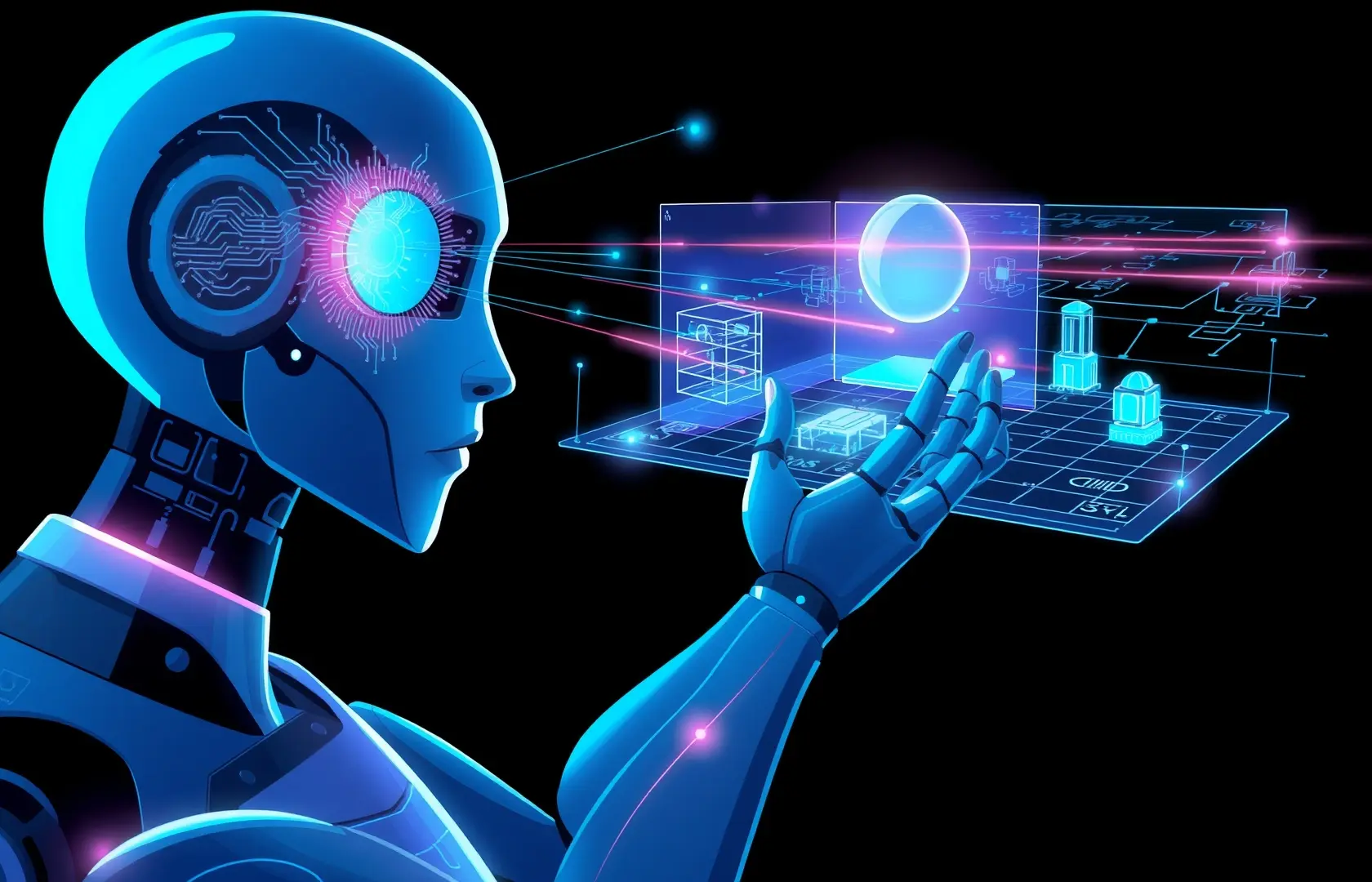
The transition from passive artificial intelligence to agentic systems marks one of the most significant shifts in the history of computation. With the introduction of Agentic Vision in Gemini 3 Flash, Google has moved beyond the era of models that merely describe what they see. This latest iteration is designed to observe, reason, and execute actions based on visual input in real-time. By bridging the gap between perception and agency, Gemini 3 Flash transforms the “eyes” of AI into a tool for direct interaction with the digital and physical worlds.
Gemini 3 Flash represents a refined approach to multimodal intelligence. While its predecessors focused on high-accuracy image recognition and captioning, the 3-series Flash model is optimized for low-latency reasoning. This enables the model to function as an autonomous agent—one that can navigate software interfaces, interpret complex diagrams to suggest repairs, or even guide robotic movements by understanding spatial hierarchies. This isn’t just about faster processing; it’s about a fundamental change in how AI models prioritize visual data for decision-making.
Understanding Agentic Vision: More Than Just Perception
To appreciate the breakthrough of Agentic Vision, one must distinguish it from standard Computer Vision. Traditional models are descriptive; they can tell you there is a “red lever” in an image. An agentic model, however, understands the functional utility of that lever. It knows that pulling the lever might stop a machine, and more importantly, it can generate the specific code or command necessary to execute that action within a system.
Spatial Intelligence and Interactive Reasoning
A core pillar of Gemini 3 Flash is its enhanced spatial reasoning. The model doesn’t just treat an image as a flat grid of pixels; it perceives the depth, orientation, and relationship between objects. This spatial intelligence allows for “interactive reasoning,” where a user can point to a complex blueprint and ask the AI to identify structural weaknesses. Because the model is agentic, it can then cross-reference those weaknesses with local building codes and generate a compliance report without further human intervention.
This capability is particularly transformative for the Apple and Google AI deal, where the integration of such advanced vision models could redefine how smartphones interact with the user’s environment. For more on how this partnership is shaping the future of mobile intelligence, you can read about the impact of Gemini on iPhone.
Why Gemini 3 Flash is a Game-Changer for Performance
The “Flash” designation in the Gemini family has always signified speed and cost-efficiency. However, Gemini 3 Flash pushes these boundaries further by integrating agentic workflows directly into the model’s inference path. This means the model doesn’t need to “call home” to a larger Pro model for every decision, significantly reducing the latency involved in vision-based tasks.
Low Latency and High Throughput
For enterprises, the high throughput of Gemini 3 Flash means that hundreds of video streams can be analyzed simultaneously for specific agentic triggers. In a warehouse setting, the model can monitor security feeds not just for motion, but for safety violations—automatically pausing machinery if a worker enters a restricted zone. The efficiency of the 3 Flash architecture makes these “always-on” agentic applications financially viable for the first time.
- Native Multimodality: Unlike models that use separate encoders for text and vision, Gemini 3 Flash is trained on a unified stream of data, allowing for more seamless transitions between seeing and doing.
- Function Calling: The model features robust support for calling external tools and APIs based on visual evidence.
- Vibe Coding: A new paradigm where the model interprets high-level visual “vibes” or styles and translates them into functional front-end code.
Practical Applications: From Robotics to Code Execution
The real-world utility of Agentic Vision is best demonstrated through its diverse application across industries. By providing a model that can “think through its eyes,” developers are finding solutions to problems that were previously too complex for automation.
Autonomous Document Extraction and Workflow
In finance and law, documents are rarely just text; they are full of charts, tables, and handwritten annotations. Gemini 3 Flash can look at a 50-page complex financial filing, understand the flow of data across multiple charts, and automatically populate a database while flagging inconsistencies. It acts as an intelligent auditor rather than a simple OCR tool. This level of autonomy reduces the need for human oversight in data entry by over 70% in early testing benchmarks.
Beyond documentation, the model’s vision-to-action pipeline is being integrated into consumer assistants. This technology is likely the engine behind upcoming features in the Gemini-powered Siri, where the assistant will be able to see what is on your screen and perform multi-step actions across different apps on your behalf.
Empowering the Developer Ecosystem
Google has made Gemini 3 Flash accessible through Google AI Studio and Vertex AI, ensuring that developers can begin building agentic applications immediately. The model supports long-context windows, which is crucial for vision tasks involving long video clips or massive PDF libraries. A developer can upload a 10-minute video of a software bug occurring and ask the model to not only find the root cause but also write the fix in the source code.
To learn more about the technical specifications and to start building, visit the official Google AI Studio. For enterprise-scale deployments, Google Cloud offers specialized tools to integrate Gemini 3 Flash into existing business logic via Vertex AI.
The Broader Impact on Consumer Tech
As Agentic Vision becomes standardized, we will see a move away from “chatbots” toward “action-bots.” Your devices will no longer wait for a precise text command; they will observe your context and offer assistance. If you are looking at a broken bike chain through your camera, Gemini 3 Flash could identify the specific model, check your local hardware store for parts, and open a YouTube tutorial at the exact second the repair begins. This proactive agency is the hallmark of the Gemini 3 era.
The implications for accessibility are also profound. For users with visual impairments, an agentic model can provide a live description of their surroundings and act as a navigator, identifying obstacles and interacting with smart home devices to clear a path or adjust lighting automatically.
Looking Ahead: The Future of Agentic AI
The release of Gemini 3 Flash is just the beginning of a larger roadmap by Google DeepMind to achieve a form of “General Agency.” While we are not yet at the stage of fully autonomous robots performing every human task, the ability for a lightweight, fast model to execute actions based on visual reasoning is a massive leap forward.
As we look toward 2025 and beyond, the integration of these models into wearable hardware, augmented reality, and industrial robotics will continue to accelerate. Gemini 3 Flash proves that you don’t need the largest model on the planet to have the most effective agent; you simply need a model that can see the world and know exactly what to do next.