Google DeepMind’s AI Co-Clinician Revolutionizes Medical AI
Google DeepMind recently unveiled its “AI co-clinician,” a cutting-edge artificial intelligence system designed to assist doctors by providing clinical decision support. In recent blind evaluation tests comparing the AI co-clinician to OpenAI’s GPT-5.4, DeepMind’s system showed superiority in generating medical responses, although it still does not surpass experienced physicians.
Performance in Blind Doctor Evaluations
During the tests, expert physicians reviewed medical queries answered by three systems without knowing which was which: the AI co-clinician, GPT-5.4, and human doctors. The AI co-clinician was preferred over GPT-5.4 by doctors 63% to 30%, demonstrating clearer, more precise, and contextually accurate responses, particularly in primary care-related queries.
Despite its advances, the AI co-clinician still trails behind the nuanced judgment and expertise of seasoned physicians, highlighting that AI support is best suited as a complementary tool rather than a replacement for professionals.
Innovative “Triadic Care” Model
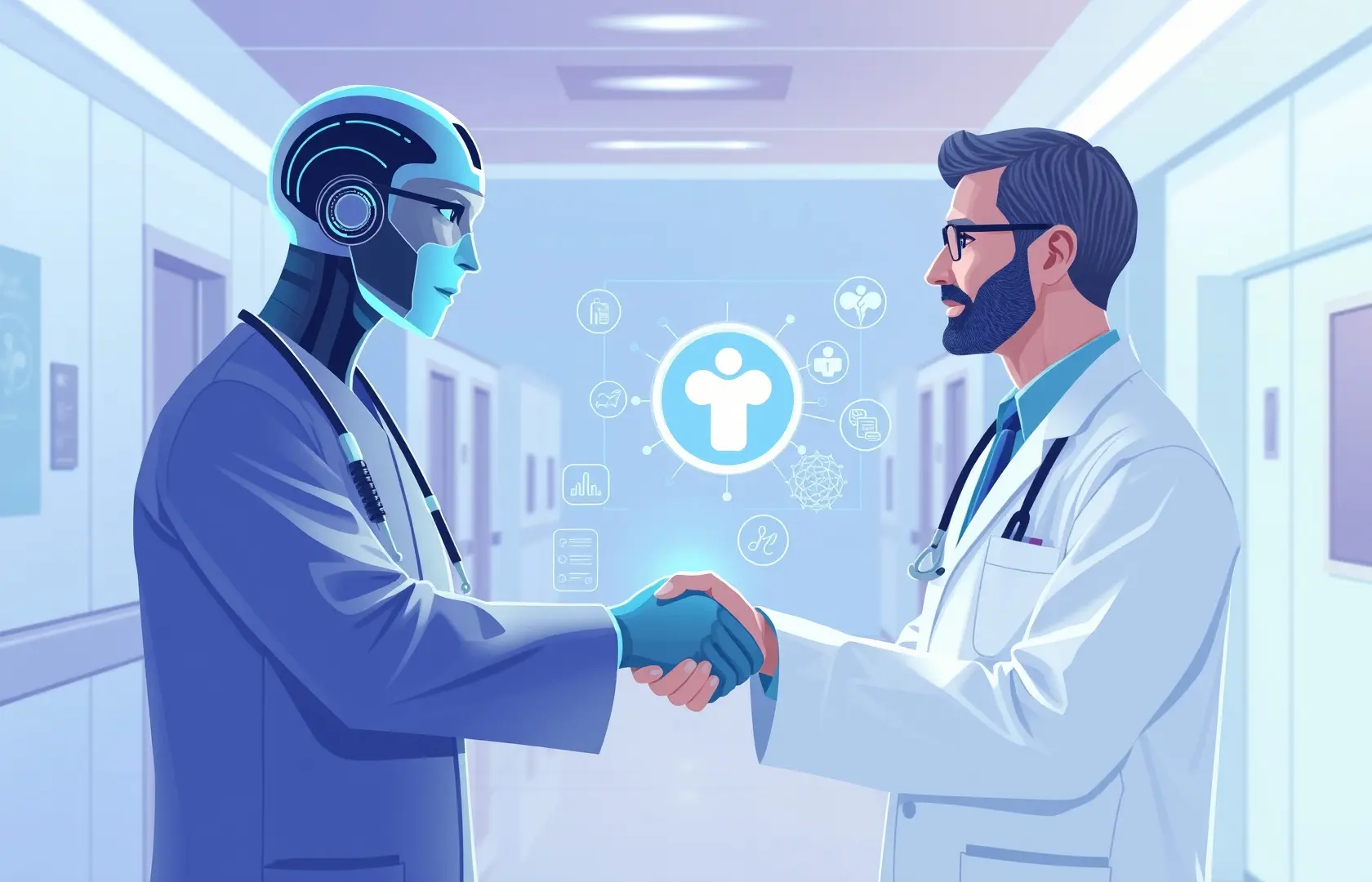
Google DeepMind is developing the AI co-clinician to function within a “triadic care” framework, where AI, patients, and human clinicians interact to improve healthcare delivery. This model encourages collaborative decision-making that blends AI efficiency with human empathy and oversight.
Zero Critical Medical Errors in Tests
One of the most impressive outcomes from the testing was the AI co-clinician’s record of zero critical errors across 97 out of 98 cases, significantly increasing trust in AI-assisted clinical advice while reducing risks that come from erroneous recommendations.
Comparison With GPT-5.4 and Other AI Models
- Better Clinical Reasoning: The AI co-clinician demonstrated more reliable clinical reasoning and use of medical data when compared to GPT-5.4.
- Physician Preference: Physicians showed a clear preference for the AI co-clinician’s generated responses, reflecting its higher clinical accuracy.
- Specialized Medical Knowledge: Designed specifically for healthcare, the co-clinician outperformed general-purpose AI models in medical benchmarks.
Future Outlook for Medical AI
While promising, Google DeepMind’s AI co-clinician is a step along the path to AI integration in healthcare, not an endpoint. Continued development and rigorous clinical trials are needed before widespread adoption.
This technology highlights the growing role of AI in medicine, improving diagnostic accuracy, streamlining workflows, and ultimately supporting better patient outcomes without replacing healthcare professionals.
To learn more about Google’s AI innovations and strategies, see Google’s AI enterprise strategy.